
CUSTOMER / A GLOBAL LIFE SCIENCES ENTERPRISE WITH A DEDICATED INTERNAL RESEARCH FUNCTION
How a global life sciences enterprise turned two years of research into on‑demand intelligence
A global life sciences enterprise consolidated two years of internal research into a single, searchable workspace—and enabled analysts to query that accumulated organizational knowledge on demand.

2+ years
of research, fully searchable
1,000s+
of queries run
690+
automated findings reports surfaced by AI Agents
The best never guess
Discover how Dovetail can help your team turn customer feedback into decisions.
The research function was the organization’s institutional memory
The research team at this global life sciences company makes it their job to understand how their organization works, from the inside. Not its research programs or scientific operations—its own internal machinery: the tools employees depend on, the processes that connect business functions, the systems that ultimately accelerate or slow their scientific work.
Every study they complete adds to a growing body of knowledge about how the organization operates and where it needs to change. Their findings matter to people who haven’t commissioned the work: senior leaders making decisions, colleagues evaluating new systems, teams planning the next cycle.
The intelligence was there. The challenge was making it available—and safe to share.
The challenge: knowledge expiring when projects end
This enterprise’s accumulated knowledge was fragile. “We’re losing all this research and we cannot leverage it,” the Research Operations Lead said. “We don’t know where it is. People leave the organization.”
A second problem compounded the first: much of the team’s research involved sensitive content, including employee feedback, vendor evaluations, and internal assessments of systems used in scientific operations.
Sharing findings more broadly required removing names, roles, and identifiable details before anyone outside the original project could see them. Done manually, that step created a bottleneck serious enough to limit how much research could circulate at all.
When people left, knowledge left with them. What remained sat behind a compliance process nobody had the bandwidth to run at scale.
The solution: one governed home for every project
The team wanted everyone to feel “comfortable and confident in extracting what they want from Dovetail.” That started with giving its research a single, permanent home.
After Dovetail passed a rigorous third-party security and compliance review, the organization introduced a non-negotiable policy: all research must live in the platform.
Every study requires a transcript and an AI-generated summary at minimum. Research conducted by contractors gets uploaded under the same standard.
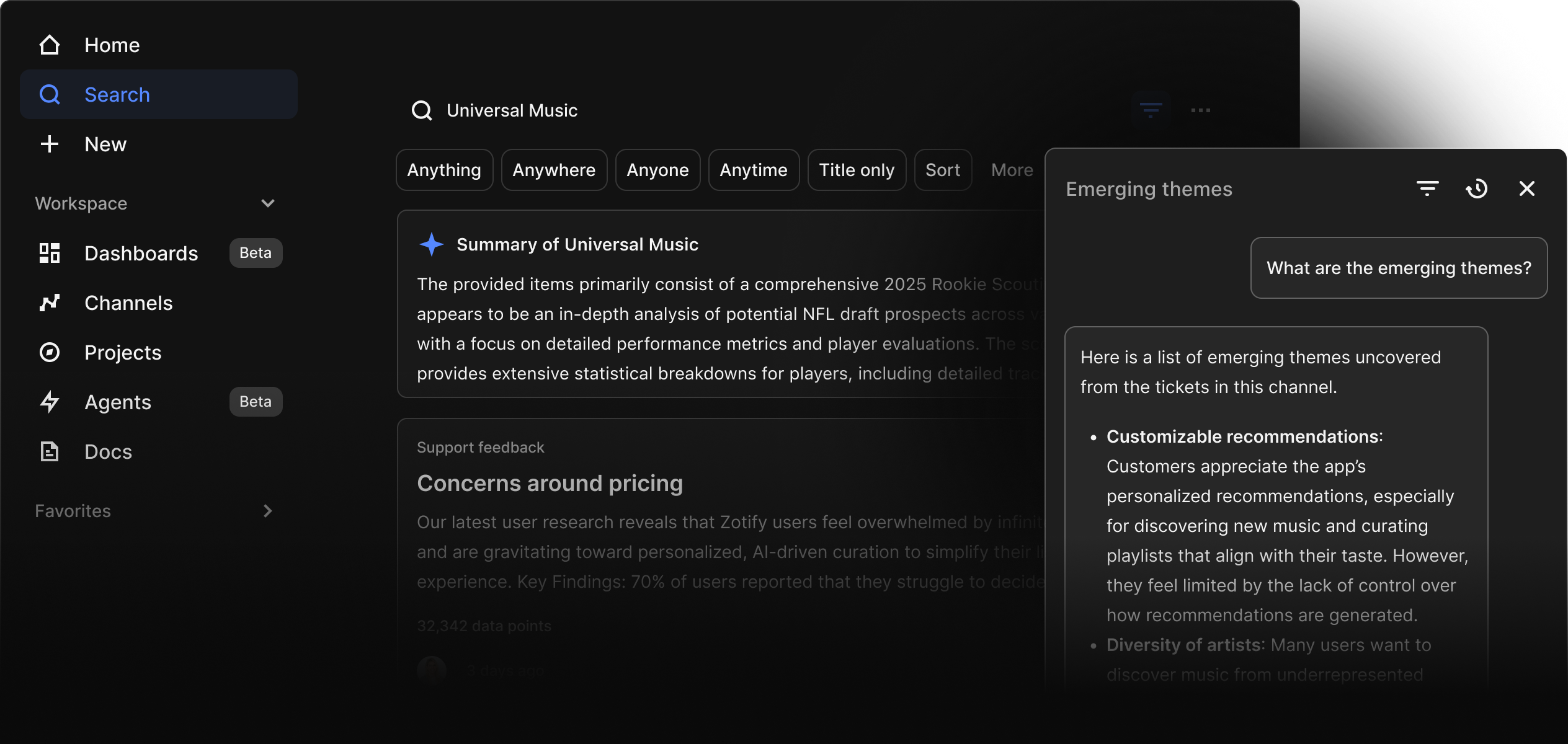
Now all three groups work from the same source of truth—R&D, patient and healthcare, and internal operations each contributing to a shared base that no one has to maintain separately. When a researcher leaves, or a project closes, the intelligence lives on. AI Analysis became central to handling the volume, surfacing patterns across studies so researchers can focus on the findings that most need human interpretation.
Senior leadership uses Chat to pose questions directly. When a decision-maker needs input, the team can point them to the data rather than interrupt active projects to produce a summary on demand.
The unlock: sensitive content handled at scale
The second problem—sensitivity as a distribution bottleneck—required a different solution. The team upgraded to Enterprise in 2025, and redaction was the primary driver.
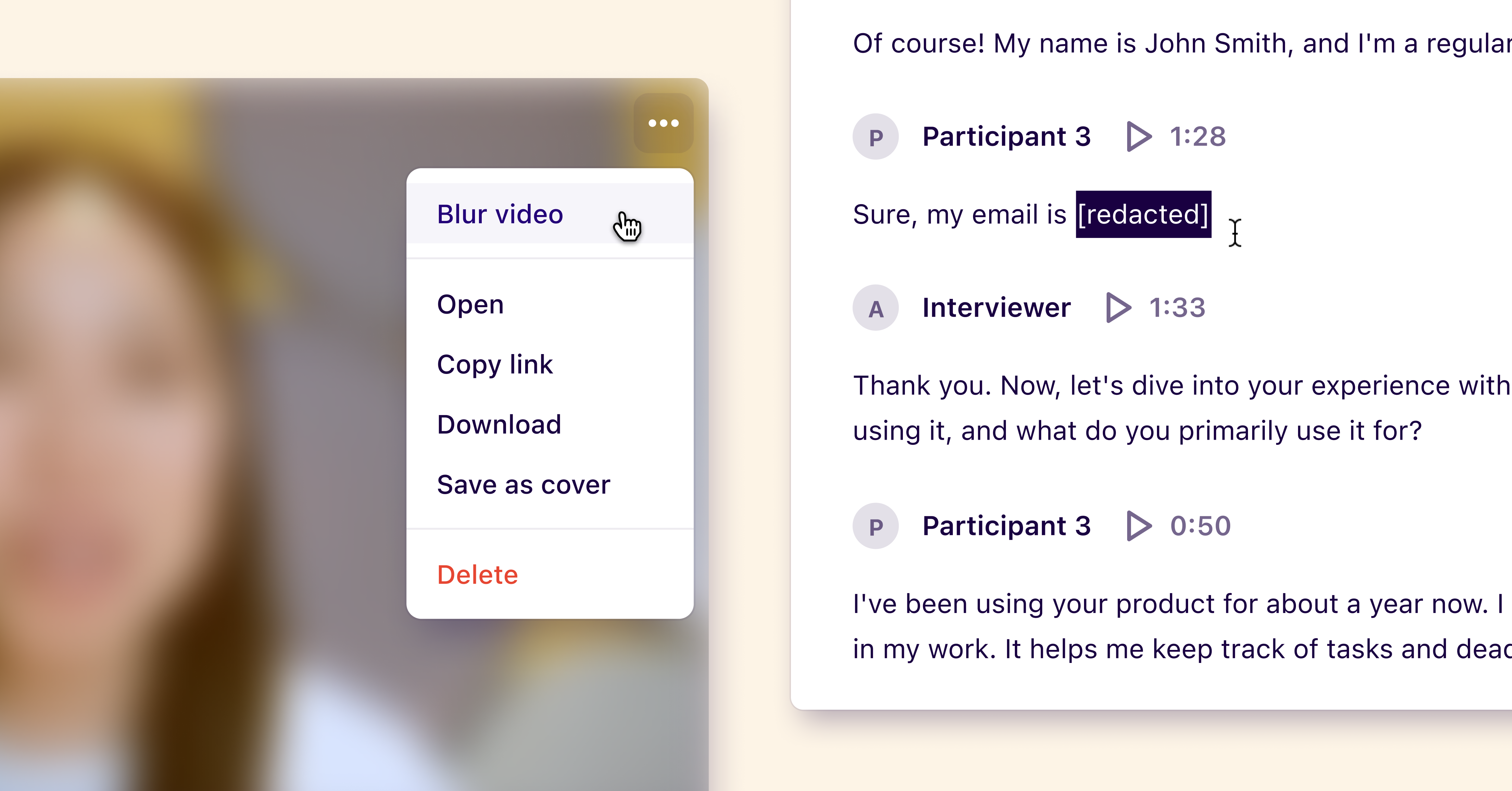
Dovetail’s AI-powered redaction works across video, audio, and transcripts in two modes: suggest mode flags potential redactions for a human reviewer to confirm; auto mode applies them automatically as new content arrives. For a team managing a continuous intake of research, removing that manual checkpoint changed what was possible.
With sensitive content handled reliably at ingestion, findings can reach stakeholders without individual review of each piece. The move to Enterprise came down to trust rather than seat count: the ability to handle sensitive content confidently enough to share it broadly across the business.
The payoff: two years of research, available on demand
Within months, AI Agent usage grew from near zero to thousands of queries. Analysts no longer have to navigate project by project to find what they need. They can ask questions across their Dovetail workspace and receive traceable answers drawn from two years of accumulated research.
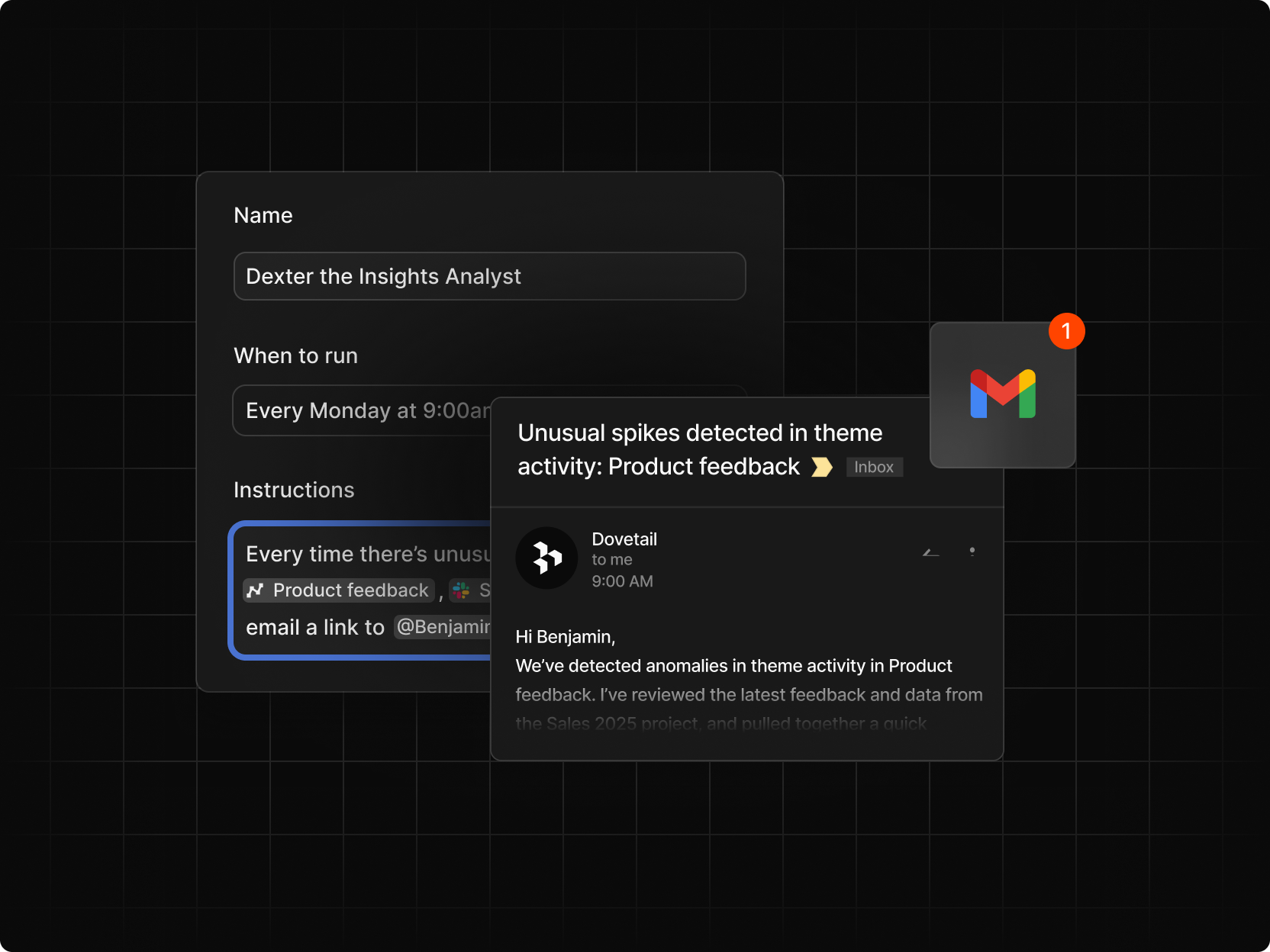
The impact goes beyond faster retrieval. Stakeholders who had never opened a research file can now receive structured, cited intelligence without every answer passing through the research team. Two years of accumulated knowledge becomes part of everyday decision-making, reaching more people without requiring the team behind it to grow.

The best [] never guess
Discover how Dovetail can help your team turn customer feedback into decisions.



FAQs
Dovetail’s AI-powered redaction works across video, audio, and transcripts in two modes: suggest mode flags potential redactions for a human reviewer to confirm, and auto mode applies them automatically as new content arrives. That removes the manual bottleneck that once limited how broadly sensitive findings could be shared.
Yes. Senior leadership can use Chat to pose questions directly against the research library, so the team can point decision-makers to the data instead of interrupting an active project for a one-off summary.
Yes. One of our customers made it a non-negotiable policy that every study lives in Dovetail with at least a transcript and an AI-generated summary, so the research stays behind when a researcher leaves or a project ends instead of leaving with them.
Yes. Separate groups, like R&D, patient and healthcare, and internal operations teams, can contribute to the same shared workspace instead of maintaining their own repositories, with AI Analysis surfacing patterns across all of it so researchers can focus on what needs human interpretation.
AI Agents help surface findings automatically as research accumulates. For one of our customers, they’ve generated more than 690 automated findings reports, with usage growing from near zero to thousands of queries within months of rollout.