AI made building faster, now customer understanding is the bottleneck

Now that AI agents can build a working prototype overnight, coding is no longer the constraint on shipping software. The harder question is whether you understand your customers well enough to know if you should build it at all.
Scoping a feature, writing it, testing it, and shipping it usually took weeks of engineering time with every team rationed by how much of that time it had. That constraint is largely gone as an AI agent can now turn a plain-English description of a feature into a working prototype overnight.
When almost any team can build almost anything, execution stops being the hard part. The hard part is knowing what’s worth building in the first place, and that depends entirely on how well you understand the people you’re building for. That’s the gap Dovetail Digital Twins are built to close.
Building stopped being the hard part
McKinsey’s analysis of nearly 300 publicly traded companies found that the top-performing fifth are already seeing 16–30% improvements in productivity and time to market by rewiring how they build software with AI. One bank in the same research cut delivery time tenfold while halving cost, using AI agents that draft, test, and ship code overnight for engineers to review each morning.
Most organizations aren’t at that level yet. McKinsey’s own maturity model puts most teams at the stage where AI speeds up individual lines of code, not entire features. But the cost of building a first version of almost anything has collapsed, to the point where a product manager can prototype a workflow in a day that used to need a dedicated engineering sprint.
The bottleneck moved to customer understanding
Making software cheaper to build doesn’t make it easier to know if you’re building the right thing—it raises the stakes on that judgment. A team that can ship ten ideas a week needs to be right about which of those ideas actually matter because the cost of being wrong now shows up ten times as often.
Good execution alone is no longer enough to win, because it’s table stakes rather than an advantage. The advantage now belongs to whoever has the clearest, fastest read on what their customers actually need.
Every team is sitting on huge amounts of customer feedback—sales calls, support tickets, survey responses, app reviews, and research interviews. The problem is that it all lives in different tools owned by different teams, so getting exactly what you need is still largely a manual, one-off exercise.
“Dovetail enables us to access all of Breville’s insights gathered from around the globe—all in one place. This is incredibly valuable and saves us from losing or repeating invaluable information about our customers.”
Constance DocosSenior UX Designer, Breville
Enter Digital Twins
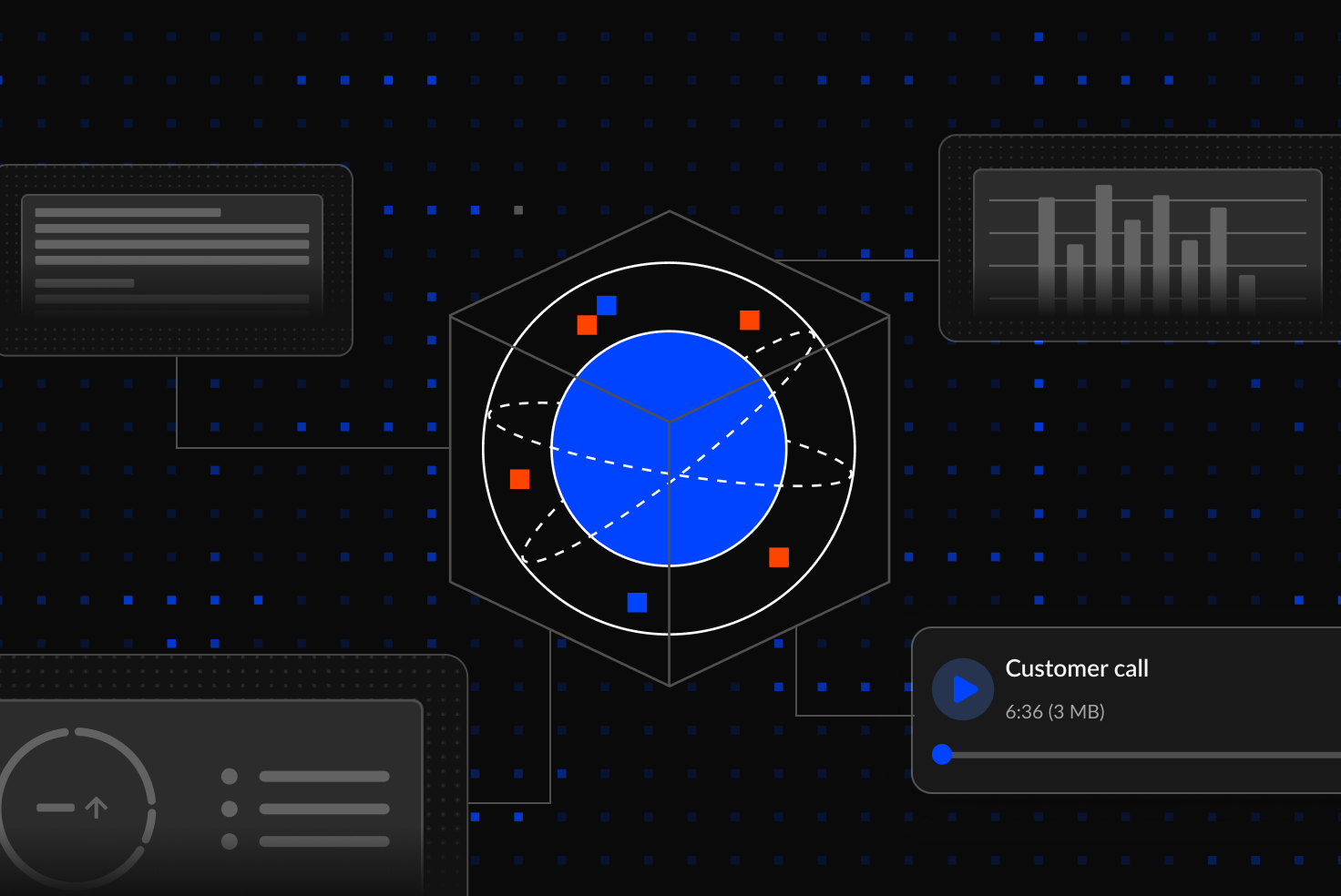
Dovetail’s answer to that gap is Digital Twins, a model of a specific customer segment or persona, built entirely from the calls, tickets, surveys, and research your team has connected to Dovetail. Ask it a question in Dovetail Chat, Slack, or Microsoft Teams and it answers the way that customer or segment actually would, with every answer traceable back to the real conversation it came from.
That’s a meaningful difference from a generic AI persona, which is just a model’s best guess at what “an enterprise customer” or “a churned user” might say. A Digital Twin only answers from evidence that’s in your workspace and updates automatically as new feedback comes in.
“Digital Twins mean anyone in your organization can go straight to the customer source, and Agents make sure the answer reaches whoever needs it.”
Benjamin HumphreyDovetail co-founder and CEO
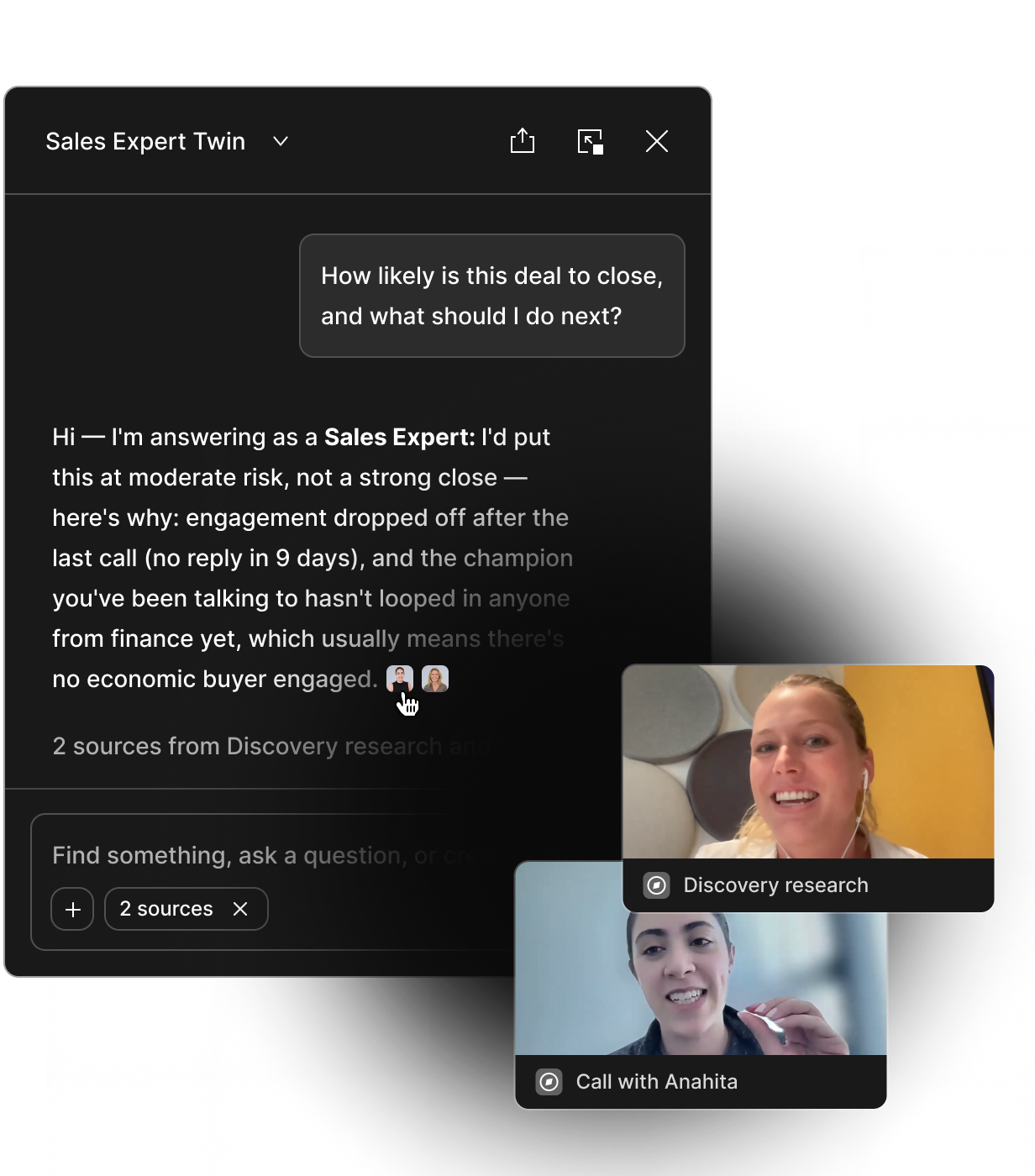
For a deeper breakdown of Digital Twin types by function, see nine customer digital twin use cases you can build today, and get step-by-step instructions for how to build one in our help center.
What this changes
None of this replaces real customer research, and it’s not meant to. A Digital Twin knows the general sentiment of what’s already been said, and it won’t catch a reaction that only shows up when someone uses the real product for the first time. For genuinely new discovery or a decision big enough to justify it, talking to actual customers is still an important piece.
What it changes is the cost of asking a question in between. Instead of waiting a week for research to find out whether an idea is worth scoping, a product manager can get a directional, evidence-backed answer the same day.
The constraints used to be on how fast teams could build. The constraint now is how well they understand the customer they’re building for. Digital Twins close the gap between having a question and getting a grounded answer, so teams know that what they’re building is what customers are actually asking for.
In a world where speed alone is no longer the edge, the teams that win will be the ones that deeply understand their customers.
FAQs
Directly in Dovetail Chat, Slack, or Microsoft Teams. There’s no need to schedule a session or wait for a report—you ask the question the moment you have it, and the twin answers from whatever calls, tickets, and surveys your team has already connected to Dovetail.
Because the evidence customer understanding depends on—sales calls, support tickets, surveys, and research interviews—is scattered across different tools and owned by different teams. Faster code generation doesn’t fix that; it just raises the stakes on getting the answer right before you build.
Not always. A Digital Twin is a fast way to pressure-test an idea or get a directional answer between research cycles. For new discovery or high-stakes decisions, it still points you back to real customer conversations rather than replacing them.
No. A Digital Twin only answers using evidence already connected to your workspace, and every answer cites the specific call, ticket, or survey it came from. If there’s no evidence to support an answer, it says so instead of guessing.
Yes. Digital Twins runs on Dovetail’s existing security foundation—SOC 2, ISO 27001, and ISO 42001 certifications, GDPR compliance, PII redaction, and an optional HIPAA add-on for regulated data.
Related Articles