
Start every study with a plan your team can get behind
A research plan turns a vague request into a study you can actually run—and defend. This template covers the sections every plan needs, and shows how Dovetail keeps the plan, the data, and the findings in one project from kickoff to insights.

Connecting the world's leading teams to their customers


What a UX research plan covers
A complete plan has seven sections: background and problem statement, objectives, research questions, method, participants and recruitment criteria, timeline and milestones, and a share-out plan. Background explains why the study exists and what decision it informs. Objectives narrow that to one or two outcomes, and research questions break each objective into things you can answer with evidence. The rest—method, participants, timeline, share-out—is the logistics that make the study real.
Anchor the plan to a decision
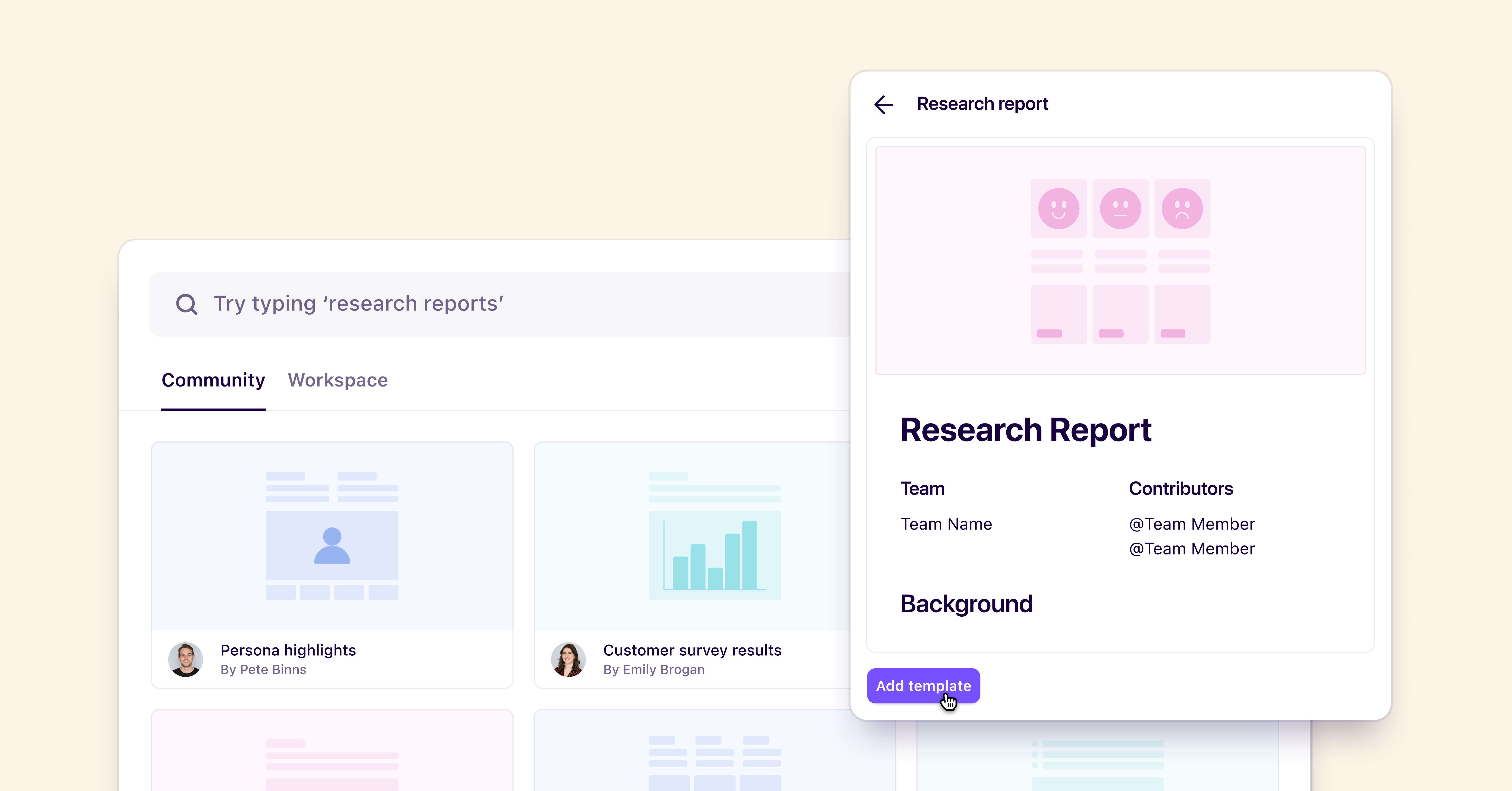
Weak plans list ten objectives; strong plans commit to one or two. Write each objective as the decision it informs—“decide whether to rebuild onboarding” beats “understand onboarding.” In Dovetail, your plan lives in the project alongside the data, so when stakeholders ask why a study exists, the answer is one click from the evidence. Insight templates give your share-outs the same structure every time, so findings always trace back to the questions you set out with.
Define who you need to hear from
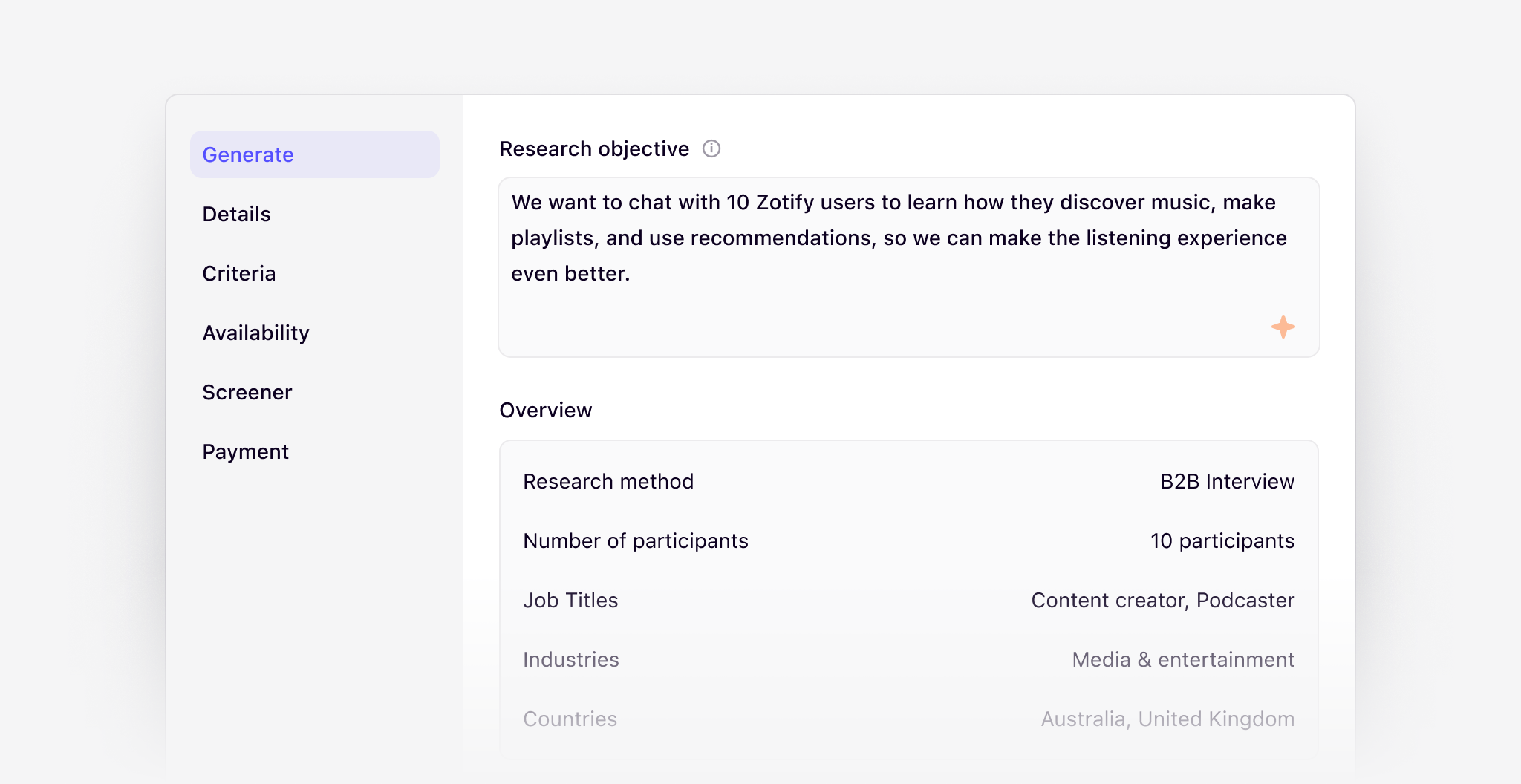
Your plan should state who qualifies, who doesn’t, and how many sessions you need—five to eight participants per segment is enough for most qualitative studies. Write screener criteria into the plan so recruitment can start the day it’s approved. Dovetail can generate a recruitment plan for your study and manage participants with contacts, so scheduling and consent don’t live in a separate spreadsheet.
Run the study where you’ll analyze it
A plan is only as good as the study it produces. When sessions run through Dovetail, recordings are transcribed automatically, highlights map back to your research questions, and AI analysis surfaces themes as the data comes in. By the last session, synthesis is already underway—and every finding cites the moment it came from.

Three things to nail before your first session
Most studies that drift skipped one of these.
Objectives
One or two decisions this research will inform—written down, agreed with stakeholders
Research questions
What you need to learn, phrased as questions evidence can answer—not interview questions
Method and sample
Interviews, usability tests, or surveys—and the screener criteria for who takes part
FAQs
Seven sections: background and problem statement, objectives, research questions, method, participants and recruitment criteria, timeline and milestones, and a share-out plan. The first three carry the most weight—they define why the study exists and what it must answer. The rest covers logistics so the study can start without another round of meetings.
One to two pages. A plan is a working agreement, not a thesis—if stakeholders can’t read it in five minutes, they won’t. Link out to supporting material like discussion guides and screeners rather than embedding them.
A brief is the request—what a stakeholder wants to learn and why it matters to them. A plan is the response—how you’ll actually study it, with method, participants, and timeline.In practice, a good plan starts by restating the brief as objectives. That’s the moment to catch misalignment, before any sessions are booked.
Research questions describe what you need to learn, not what you’ll ask participants. “Why do trial users abandon setup?” is a research question; “Walk me through your setup” is an interview question that helps answer it. Keep them answerable with evidence, tied to your objectives, and limited to three to five per study.
Yes. The plan lives in your project alongside everything it produces—recordings, transcripts, highlights, and insights. Dovetail can generate a recruitment plan, manage participants with contacts, transcribe sessions automatically, and surface themes with AI analysis as data arrives. Findings stay traceable to the research questions you started with.