
CUSTOMER / A PERSONAL BANKING PROVIDER SERVING MILLIONS
How a major bank securely connects 700+ personnel with customer intelligence
At a bank serving millions of people, the research team had years’ worth of raw customer data—but sharing it beyond the research function required navigating compliance, manual redaction, and locked systems. With Dovetail’s customer intelligence platform, they created a secure source of truth that 700+ team members now query and rely on, including the bank’s 120+ UX and UI designers.

120+
UX and UI experts grounding work in intelligence
2+ years
of searchable, reusable knowledge
700+
team members across the business self-serving customer intelligence
The best never guess
Discover how Dovetail can help your team turn customer feedback into decisions.
A large research practice with limited reach
Millions of customers rely on this bank’s apps and services every day.
Supporting these products sits one of the largest in-house research practices anywhere: around 25 researchers working with more than 120 UX and UI designers, plus many more stakeholders across the business.
The team was not struggling to produce research. It was struggling to make what they already knew usable beyond the people who had gathered it.
Questions from across the bank often had answers somewhere in years of interviews, complaints, transcripts, and reports. But finding and interpreting that evidence still depended on the research team. Without a safe way for colleagues to search it themselves, researchers were acting like a human search engine for the organization, repeatedly retrieving existing knowledge.
In a regulated bank, broadening access is more complicated than centralizing the data. Customer interviews, complaints, transcripts, and video all contain information that must be handled carefully. They needed to make years of existing evidence available across the business without exposing sensitive information, weakening governance, or relying on researchers to answer every question.
The challenge: making sensitive evidence usable
For years, research lived in static reports, slide decks, and files on locked drives. Those outputs were useful in the moment, but difficult to return to months later. Knowledge stayed close to the original project team, and when a researcher moved on, their context often had to be pieced back together from scratch.
The harder constraint was compliance. Personal information in interviews and complaints had to be removed by hand before research could be shared more widely. Video was trickier still: blurring identifying details could also obscure the on-screen behavior and reactions that made the footage valuable.
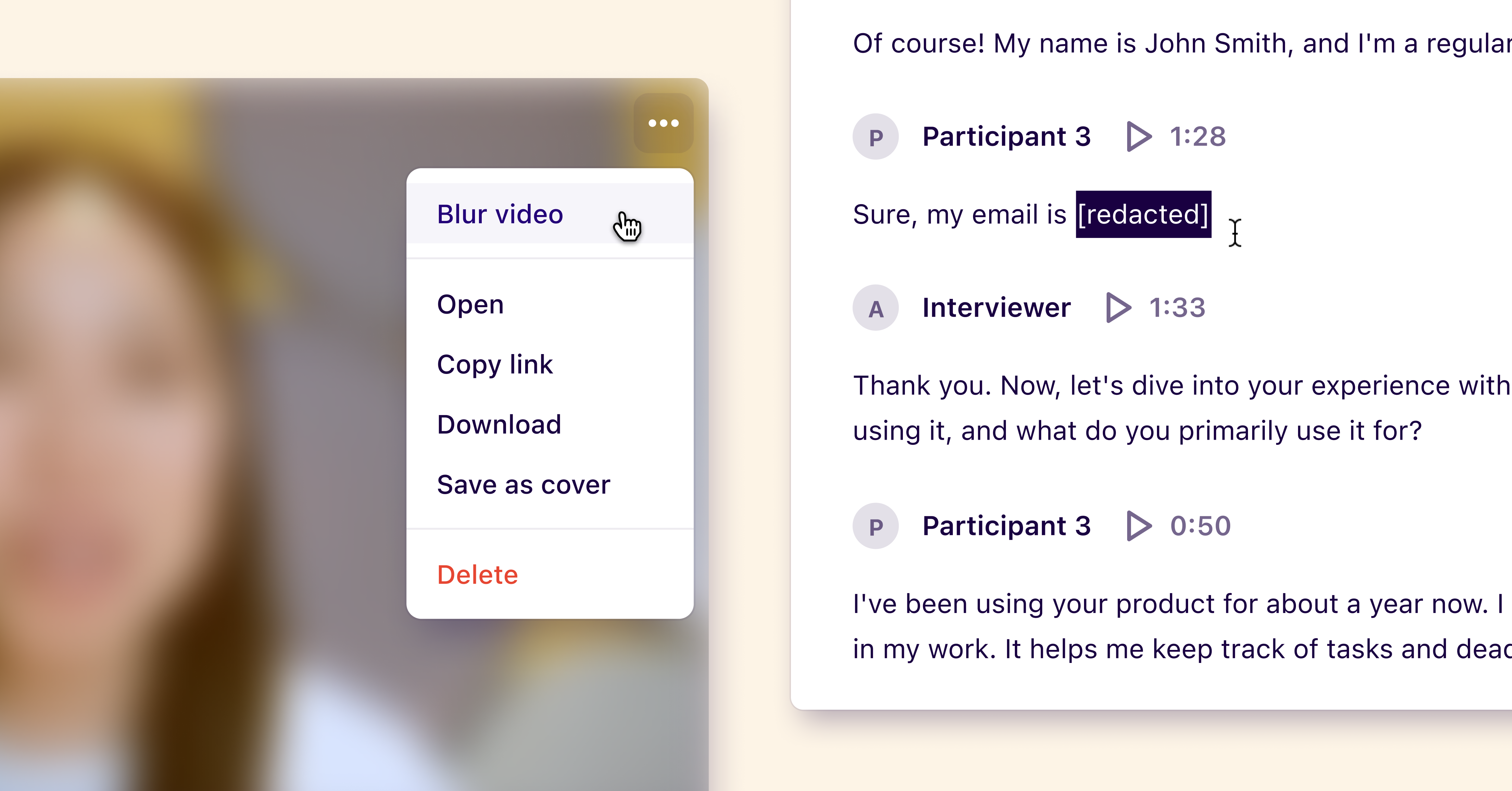
As teams looked for faster ways to synthesize transcripts, some researchers were tempted to use public AI tools, creating exactly the kind of data exposure a bank cannot allow.
The solution: a secure foundation for self-serve research
The bank moved its research into Dovetail, giving the team the controls a regulated business needs before it can broaden access. Redaction, permissions, and a secure workspace meant that sensitive material could be handled responsibly while remaining useful to the people making product and design decisions.
Once that foundation was in place, self-serve access became possible. Chat let non-researchers ask questions in plain language and receive answers cited to the original source, without leaving the bank’s environment or sending data to a public model. A designer could check what customers had already said before scoping a change, and trust where the answer came from.
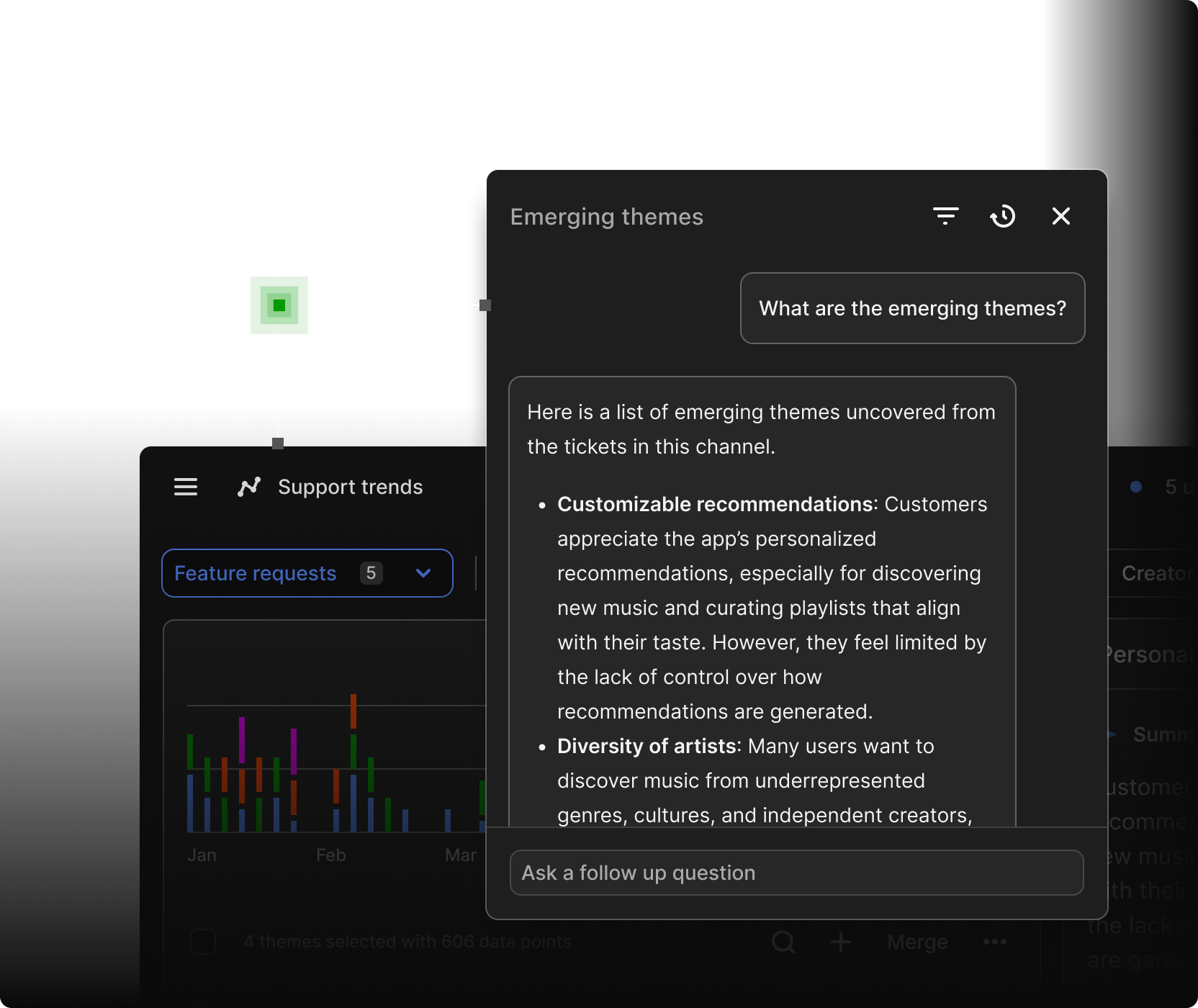
Getting started with Dovetail also cleaned up everyday research operations. One researcher used filters to collapse five or six scattered, copy-pasted spaces into a single workspace, then tagged two years of historical research so colleagues could find and reuse it. Work that had once been fragmented across files and folders became structured, searchable, and ready to support the next decision.
The payoff: 700+ team members, one compliant source of customer intelligence
The result is a different operating model. More than 700 team members across the business now self-serve customer intelligence, and over 120 UX and UI designers build on what the bank already knows rather than starting from scratch. Product owners check customer signals before scoping work, and decisions that once were queued behind a research request now happen in the flow of work.
The fact that this reach crosses divisions that rarely share customer data is pivotal for banking services. Separately governed business units—from personal banking to business banking to corporate affairs—now draw on a single source of customer intelligence. This is the kind of cross-division visibility that compliance boundaries usually make difficult to achieve.
For the research team, their role has shifted from curator to architect. Rather than answering every question, they now shape the system others rely on in Dovetail: setting the taxonomy, structure, and standards that keep a growing body of evidence trustworthy and compliant.

The best [] never guess
Discover how Dovetail can help your team turn customer feedback into decisions.



FAQs
Dovetail automatically redacts faces in video and personal information in transcripts, removing the manual redaction step that once had to happen by hand before regulated organizations could share research beyond the team that gathered it.
Yes. Chat lets anyone ask a question in plain language and get an answer cited to its original source, without leaving the company’s own environment or sending data to a public AI model, so a designer can check what customers have already said before scoping a change.
Yes. For one of our customers, a researcher used filters to collapse five or six scattered, copy-pasted spaces into a single workspace, turning research that had been fragmented across files and folders into something structured and searchable for the whole team.
Yes. One of our customers runs one of the largest in-house research practices we support: around 25 researchers supporting more than 120 UX and UI designers, plus stakeholders across the business, all drawing on the same customer intelligence instead of routing every question through a researcher.
Instead of acting as a human search engine, fielding the same questions again and again, a research team can shift from curator to architect, setting the taxonomy, structure, and standards that keep a growing body of shared evidence trustworthy and compliant.