Why vertical integration is the enterprise AI competitive advantage

The organizations that will win in the next five years aren't the ones that got every employee a ChatGPT license. They're the ones that realized intelligence compounds when it's built on a shared, enriched, purpose-built foundation.
While organizations are adding more and more AI tools to their stack, using them properly (and safely) is the next challenge. Every person in your team having access to the same tool isn’t enough because when every prompt and subsequent output is siloed, intelligence isn’t shared and every interaction starts from the beginning. With vertical integration, this changes.
What vertical integration actually means
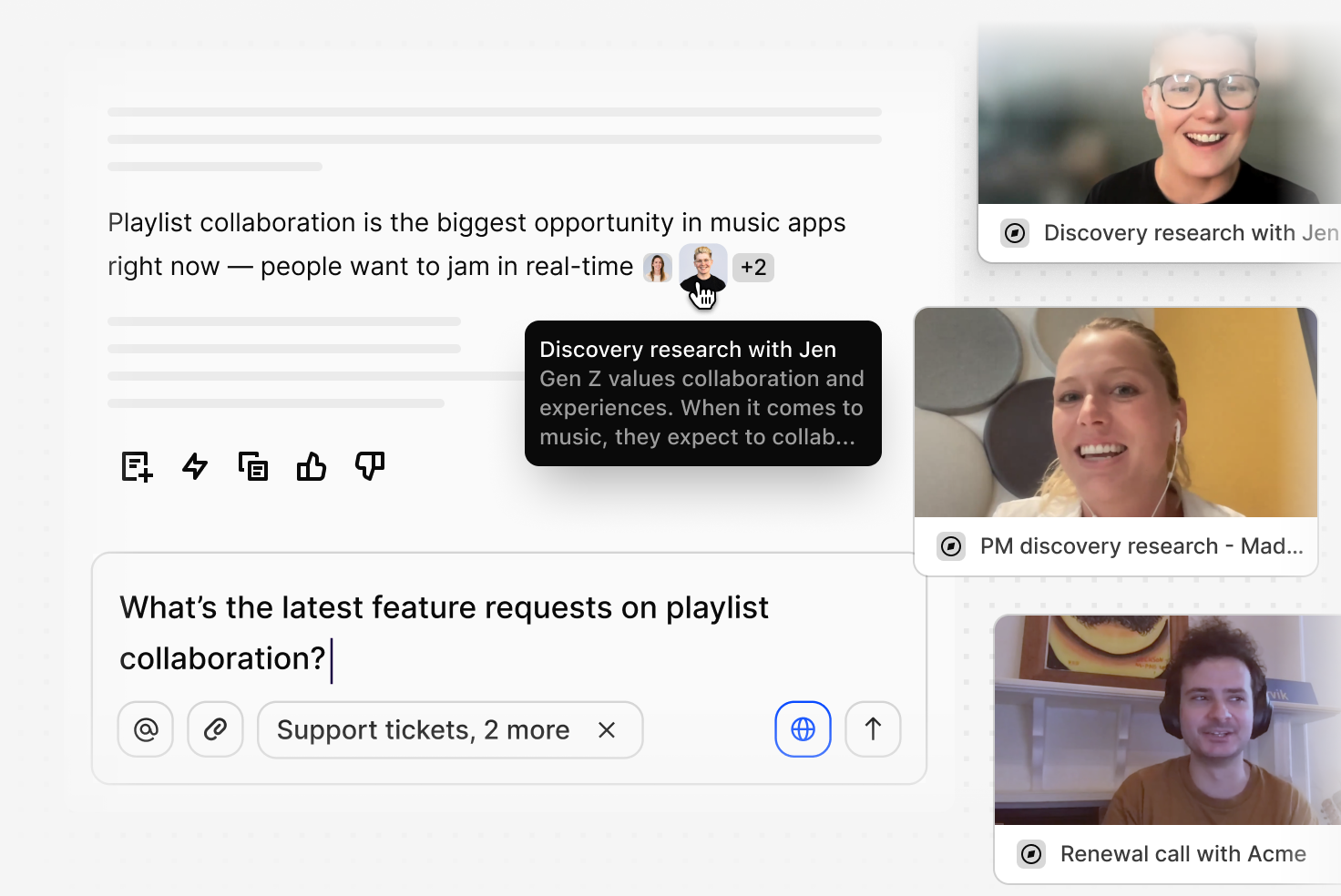
In a vertically integrated platform, a call can be automatically transcribed, summarized, tagged, and enriched with the customer’s data such as ARR, product tier and renewal date. If they mentioned a competitor or used the same language as three other churned customers from last quarter, the system draws the connection. By the time someone opens the platform and types a question, the analytical work is largely done.
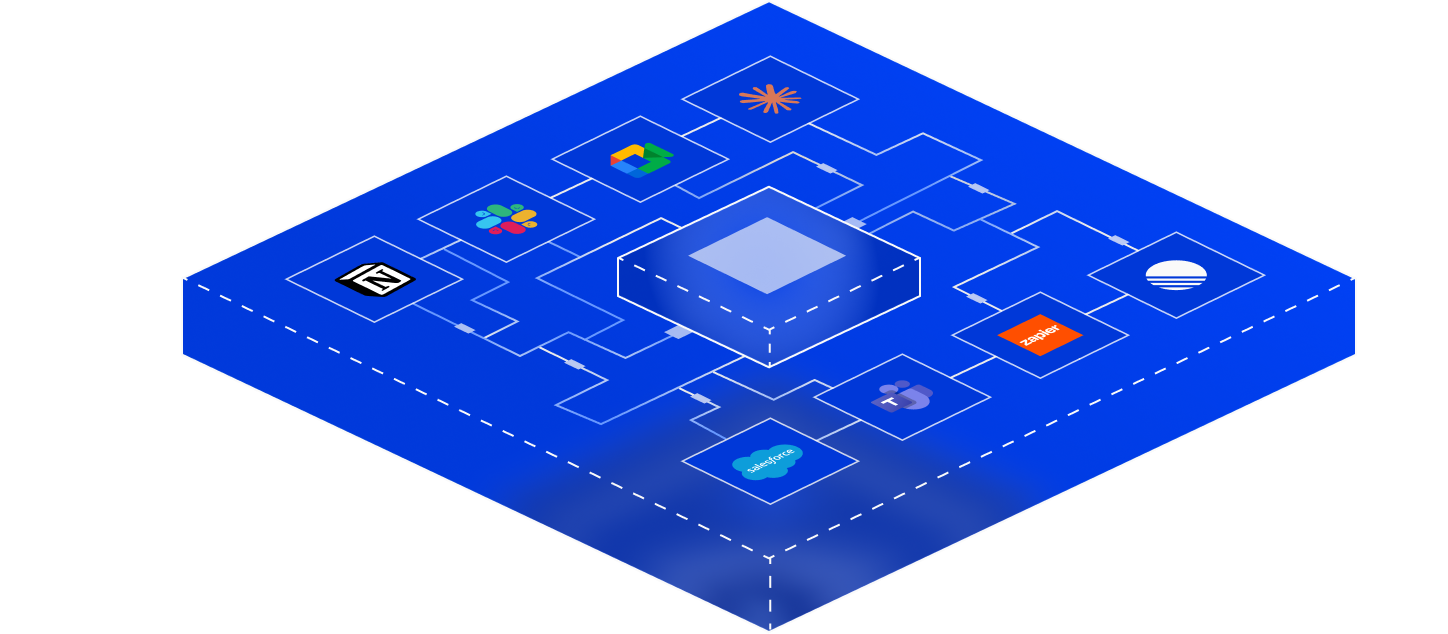
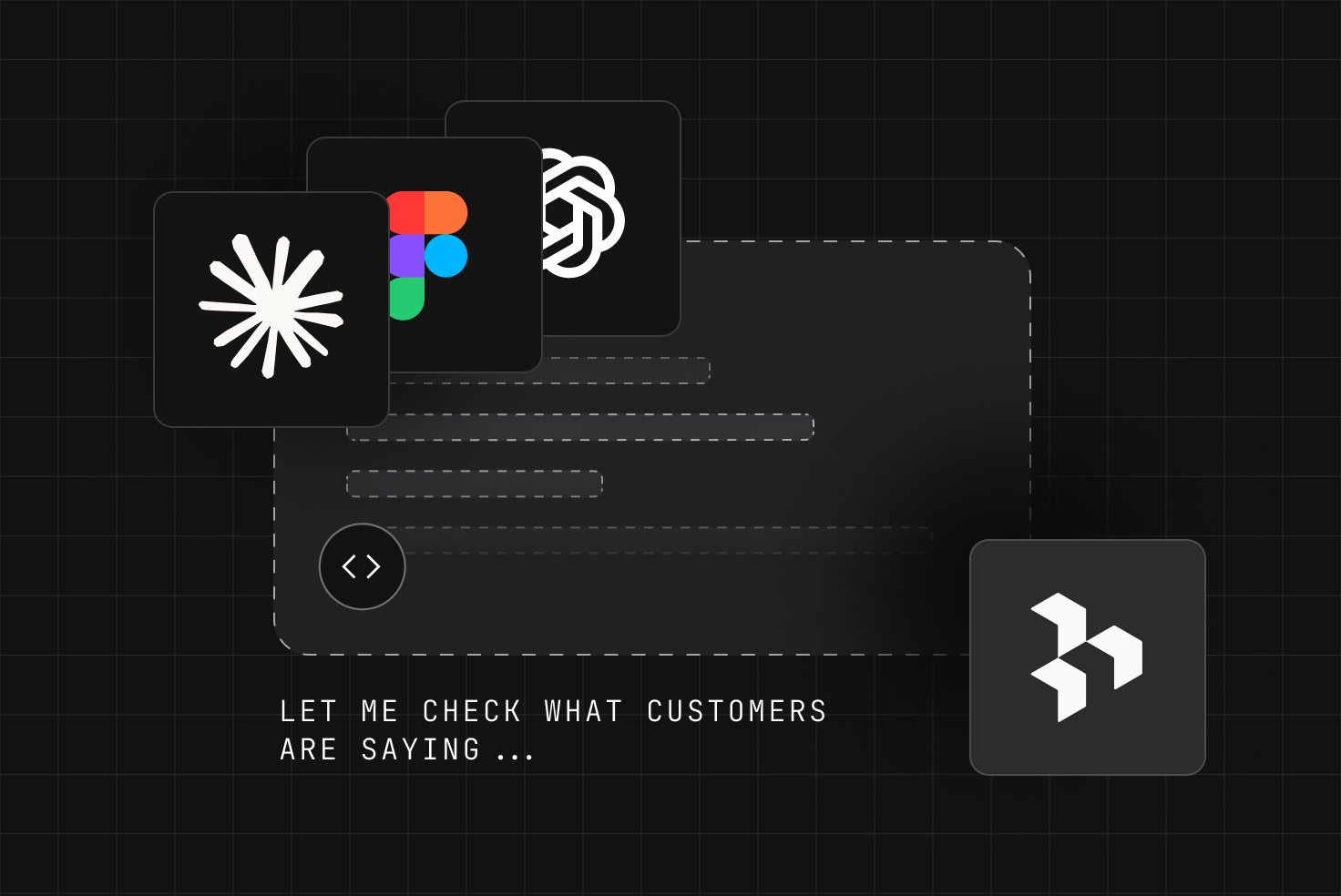
Compare this to a general-purpose AI tool where a user types a question and receives a simple, generic response. Everything beneath it (how data is stored, structured, enriched, and retrieved) is either handled by a single person, or not at all. The result is a capable tool sitting on top of an improvised infrastructure.
What this means in practice
That architectural gap shows up in how AI performs across an organization. Here's how it maps out in practice.
| Differentiator | Vertical AI (Dovetail) | Horizontal AI (Claude, ChatGPT, Gemini, Copilot) |
|---|---|---|
| Platform integration | Full stack: data lake, enrichment, orchestration, and interface in one. | Application layer only—relies on external plumbing for everything else. |
| Native data structure | Structured natively: transcription, redaction, metadata enrichment, indexing, and cited outputs. | Processed at runtime. Slower, token-heavy, no video or audio support. |
| Continuous analysis | Runs in the background. Tracks trends, flags shifts, segments automatically. | One-off, manually triggered. No real-time sync or monitoring. |
| Role-shaped use cases | Prebuilt agents and workflows for product, research, CX, sales, and leadership. | Buyers build the interpretation layer themselves. |
| Multiplayer architecture | Shared workspace: every team draws from the same data, agents, and workflows. | Built for one person on one machine. Doesn’t scale organizationally. |
| Security and compliance | Role-based access, AI redaction, SSO, SCIM, custom retention, no model training on customer data. | Users download data locally and upload to third-party tools—outside IT visibility. |
| Output quality | Multi-modal, cited responses linked to the source moment. | Plain text, limited citations, no rich media. |
| Time to value | Prebuilt connectors and role-shaped workflows ready from day one. | Raw flexibility—the full cost of setup and training falls on the buyer. |
What horizontal AI is genuinely good at
Horizontal AI tools like Claude, ChatGPT, Gemini, and Copilot are extraordinary at general-purpose reasoning, code generation, content drafting, and ad-hoc analysis, and we use them ourselves every day.
Figma’s 2026 AI Report found that 85% of product builders say AI makes them more efficient individually, which is exactly where horizontal tools shine. But the report’s most striking finding is that teams that adopt AI at both the individual and organizational level are the only group where productivity today exceeds expectations set a year ago.
What vertical integration delivers
To dive into the specifics, here’s what vertical integration delivers at the infrastructure level compared to generic horizontal AI platforms.
| Technical capability | Vertical AI (Dovetail) | Horizontal AI (Claude, ChatGPT, Gemini, Copilot) |
|---|---|---|
| Indexing, caching, and context management | Data is analyzed and ready before anyone asks a question, no matter how much of it there is. | Full token cost on every query for every user. Context limits hit quickly at enterprise scale. |
| Orchestration and prompting | Purpose-built for customer intelligence, refined over years of real-world data with continuous evals. | Each team builds and maintains their own. Prompt quality varies; no organizational standard. |
| Continuous evals | Ongoing evaluations across data types; improvements shipped to all users. | No built-in quality checks. Setting up and testing the AI for your specific needs falls entirely on your team. |
| Model selection by data type | Different models per input type to maximize quality—maintained by the product team. | Single model applied uniformly. Manual switching demands expertise users shouldn’t need. |
| Automated enrichment pipeline | Continuous ingestion, normalization, enrichment, and redaction—fully automated before any query runs. | Processed at runtime: slower, more expensive, and typically non-compliant. |
Replicating this with horizontal tools is a serious engineering project—data pipelines, enrichment layers, orchestration frameworks, access control systems, evaluation infrastructure—that your team would own, maintain, and continuously improve indefinitely. Vertical integration means that engineering investment has been made right from the beginning, ready to scale.
The compounding effect
General-purpose AI tools produce value proportional to individual effort—the quality of a user’s prompting, their skill at structuring questions and their willingness to load context themselves. When someone leaves that value leaves with them and every user starts from scratch.
With a vertically integrated platform every piece of data adds to the foundation, every insight refines the system’s understanding of what matters to this organization, and every workflow built becomes available to the next person who runs it. The platform becomes more useful as more data flows through it.
The teams seeing the deepest impact are the ones where AI adoption is happening at both the individual and organizational level—a compounding infrastructure the whole organization builds on.
The architectural bet
The organizations that have success will be the ones that made a deliberate choice early to build on a foundation where intelligence compounds.
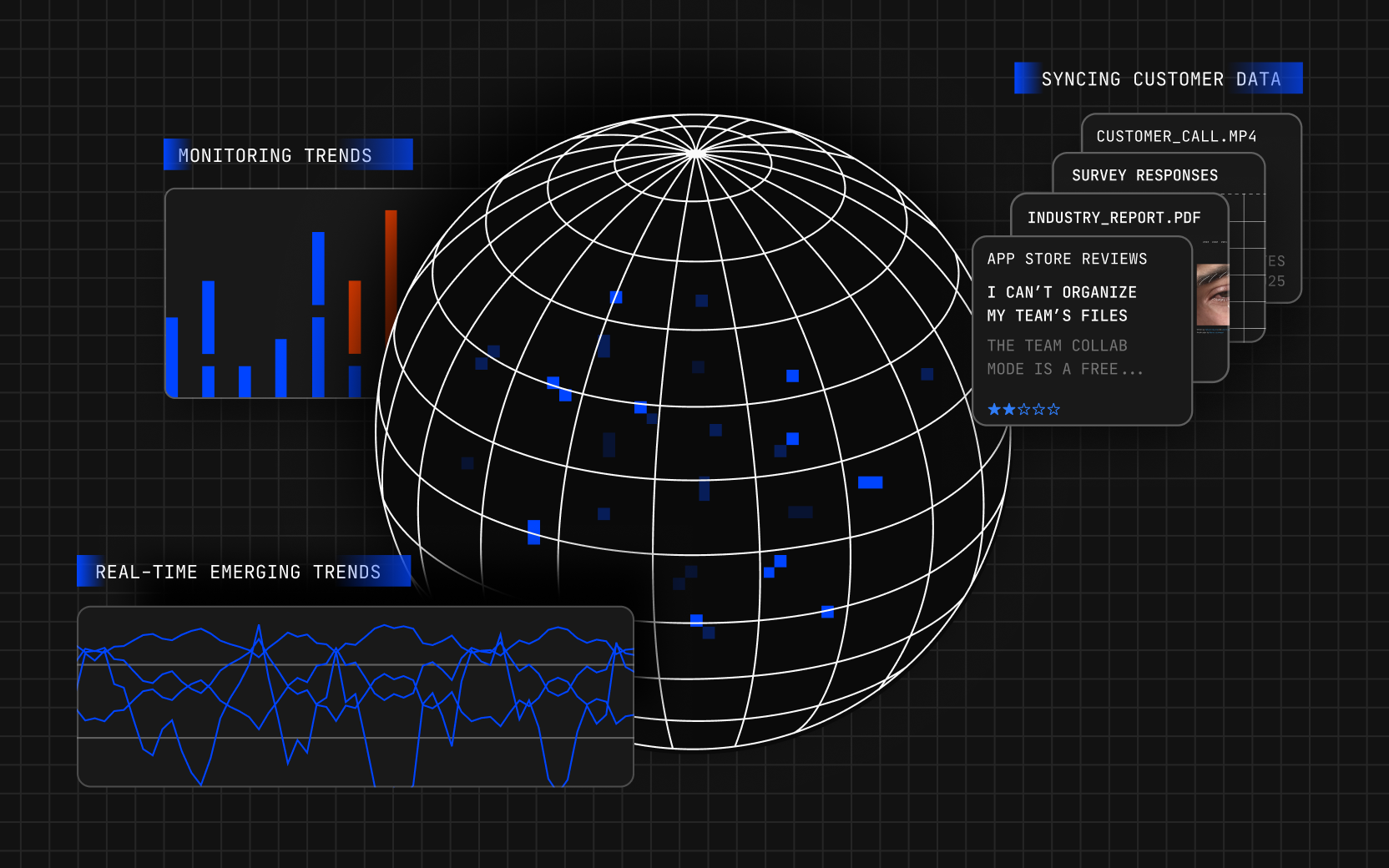
That foundation centralizes every signal—calls, tickets, surveys, reviews—before anyone asks a question, analyzes it continuously rather than on demand, and makes the same enriched data available to every team. Insight reaches the people who need to act on it, exactly when they need it.
Vertical integration is what turns AI from a productivity tool for individuals into a strategic asset for the organization. The best teams don’t guess, they build on infrastructure designed to make them right.
Related Articles