
Build personas from evidence, not assumptions
Most personas fail because they’re fiction—a stock photo, a made-up name, and traits nobody can trace to data. This template covers what an evidence-backed persona contains, and how Dovetail’s analysis turns your interviews and feedback into personas your team will actually trust.
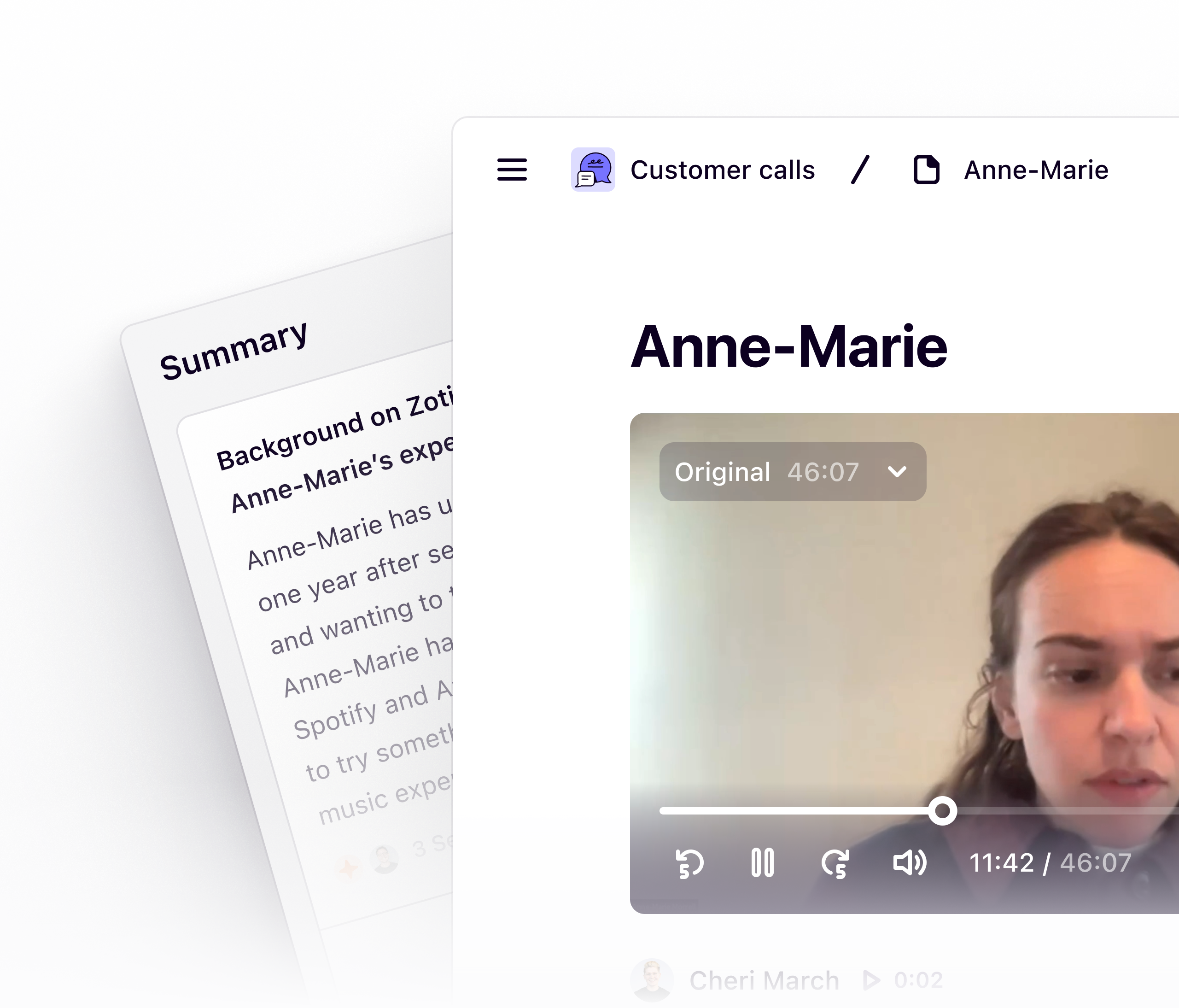
Connecting the world's leading teams to their customers


What a user persona template includes
A useful persona has six parts: an archetype name that describes behavior rather than demographics, context (role, environment, and the tools they work with), goals and motivations, behaviors and workflows, pain points and unmet needs, and verbatim quotes. Add a seventh section most templates skip: the evidence—which studies, how many participants, and when the data was collected. That last section is what separates a persona from a guess.
Find the behavior patterns first
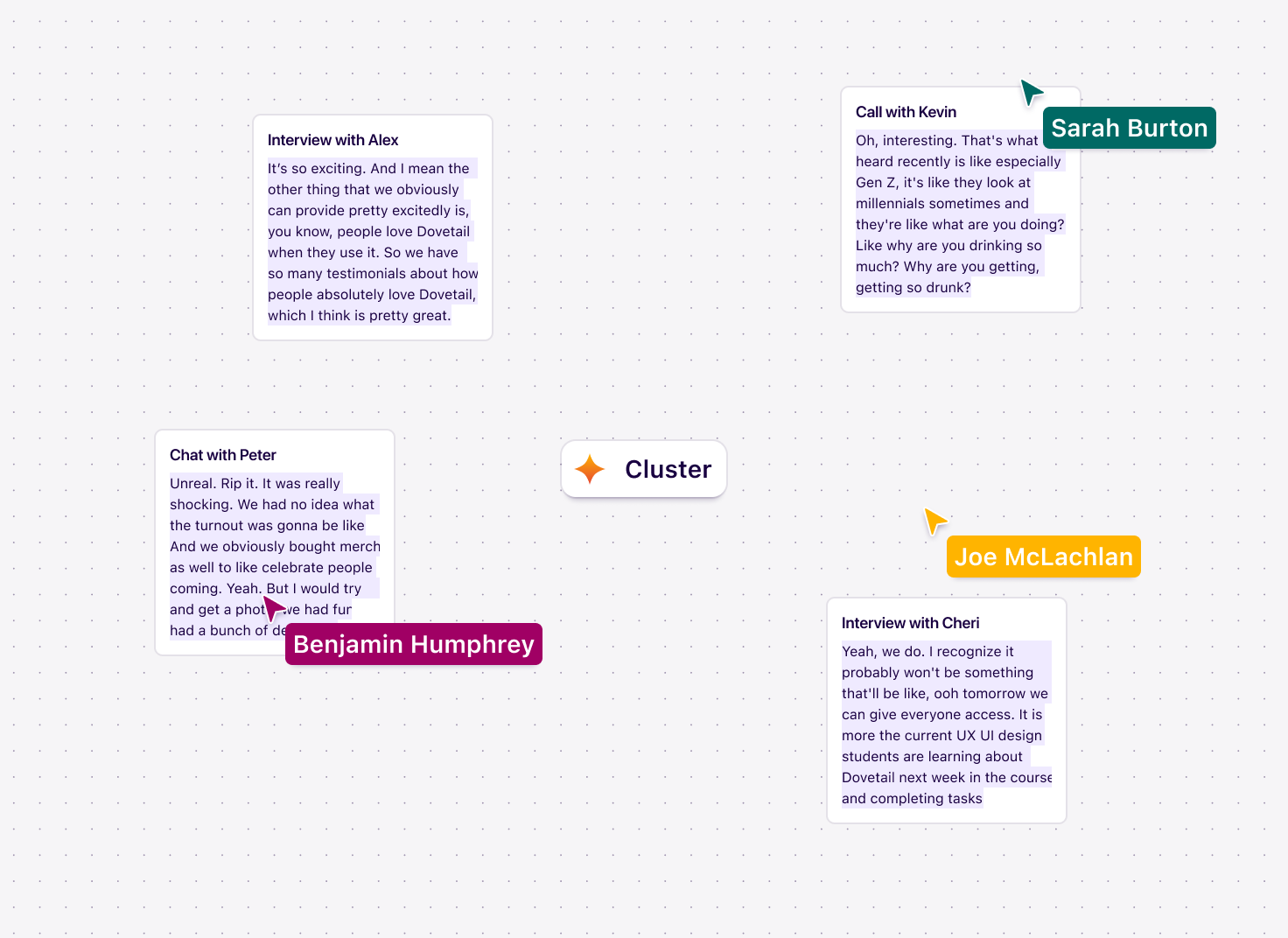
Personas come from patterns, not from brainstorms. Cluster highlights from your interviews to see which behaviors, goals, and frustrations repeat across participants—those clusters are your persona candidates. Dovetail’s AI clustering groups related highlights automatically, so the patterns emerge from the data instead of from whoever talks loudest in the workshop.
Let every feedback channel inform the persona
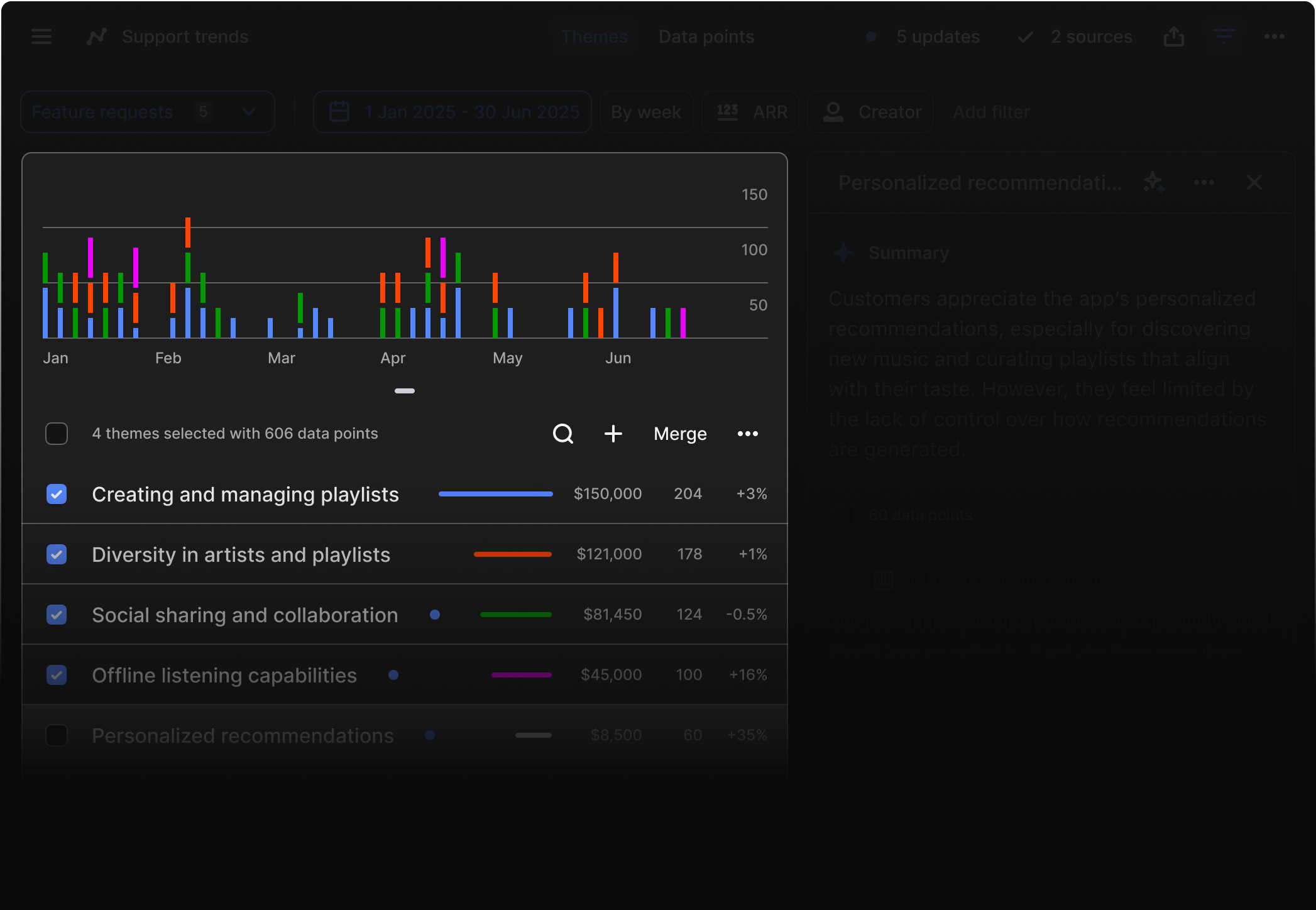
Interviews give personas depth; ongoing feedback keeps them honest. Dovetail ingests support tickets, sales calls, app reviews, and survey responses, and AI surfaces the themes running through them—no manual tagging required. When a persona’s pain points show up in this week’s tickets, you know it still describes real users.
Fill every section with cited answers
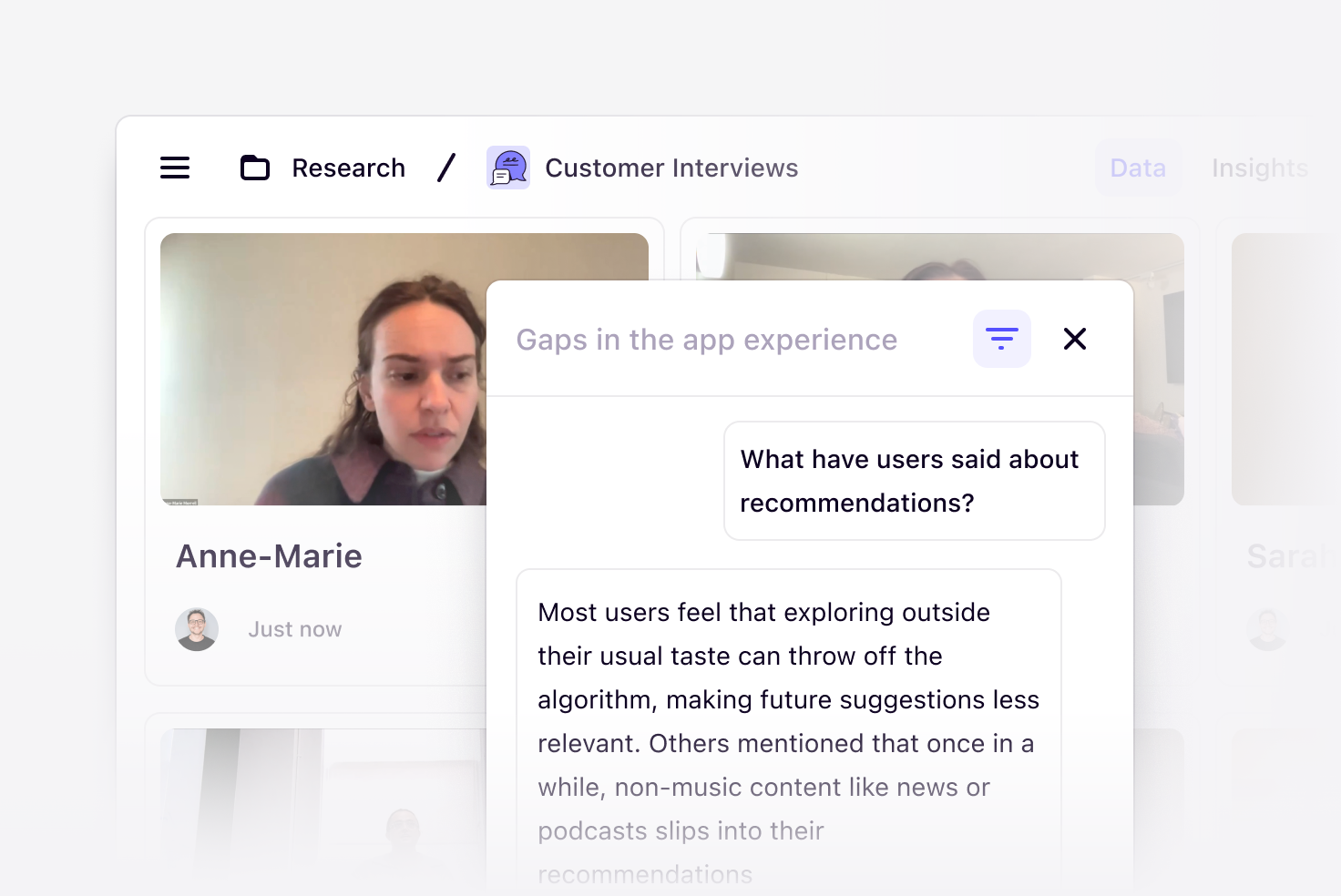
Writing the persona is faster when you can interrogate your data directly. Ask questions like “what do admins struggle with during setup?” and Dovetail’s contextual chat answers from your research, with citations back to the source. Each section of the template gets filled with claims you can trace—and quotes pulled from real conversations, not composed from memory.
Three signs of a persona worth keeping
Test every persona against these before it goes on a wall.
Traceable
Every trait links to data—a highlight, a quote, a theme across feedback
Behavioral
Defined by what users do and need, not by age, gender, or job title alone
Current
Refreshed as new feedback arrives, with a visible date on the evidence
FAQs
Six core sections: an archetype name, context (role, environment, tools), goals and motivations, behaviors and workflows, pain points and unmet needs, and verbatim quotes. Add an evidence section listing the studies and sample behind the persona—it keeps the persona accountable and tells you when it’s due for a refresh.
Three to five for most products. Fewer and you flatten meaningful differences between users; more and nobody can remember who’s who. If two personas would lead you to the same product decisions, merge them—personas earn their place by changing decisions, not by covering every user type.
A common baseline is five to eight interviews per suspected segment, supplemented by whatever behavioral and feedback data you already have. The honest answer is that you need enough to see patterns repeat.You don’t need to start from scratch, though. Most teams already have interviews, support tickets, and survey responses scattered across tools. Centralizing that in Dovetail often reveals enough recurring patterns to draft personas before any new sessions are booked.
A proto-persona is built from the team’s assumptions—useful for aligning on what you believe, dangerous if it’s never tested. A research-based persona is built from data, with every trait traceable to evidence. Proto-personas are a fine starting point as long as they’re treated as hypotheses to validate, not facts to design against.
Dovetail centralizes the source data—interviews, support tickets, sales calls, surveys—and its AI analysis does the heavy lifting: transcribing sessions, clustering related highlights, and surfacing themes across channels. Contextual chat answers persona questions with citations back to the source, so every section of your template is backed by evidence. When new feedback arrives, the analysis keeps running—so personas stay current instead of expiring in a slide deck.