
Write research reports stakeholders actually read
Most research reports die unread because they’re structured for the researcher, not the reader. This template puts the answer first, backs every finding with evidence, and ends with recommendations—and Dovetail’s AI Docs can draft it from your project data, citations included.
Connecting the world's leading teams to their customers


What a research report covers
Six sections, in this order: a summary that states the answer up front, background and objectives (two or three sentences on why the study ran), method and participants, key findings, recommendations, and open questions. Limit findings to three to five—each one a claim, the evidence behind it, and why it matters. Everything else, including discussion guides and full transcripts, belongs in an appendix or a link.
Draft the report from your data
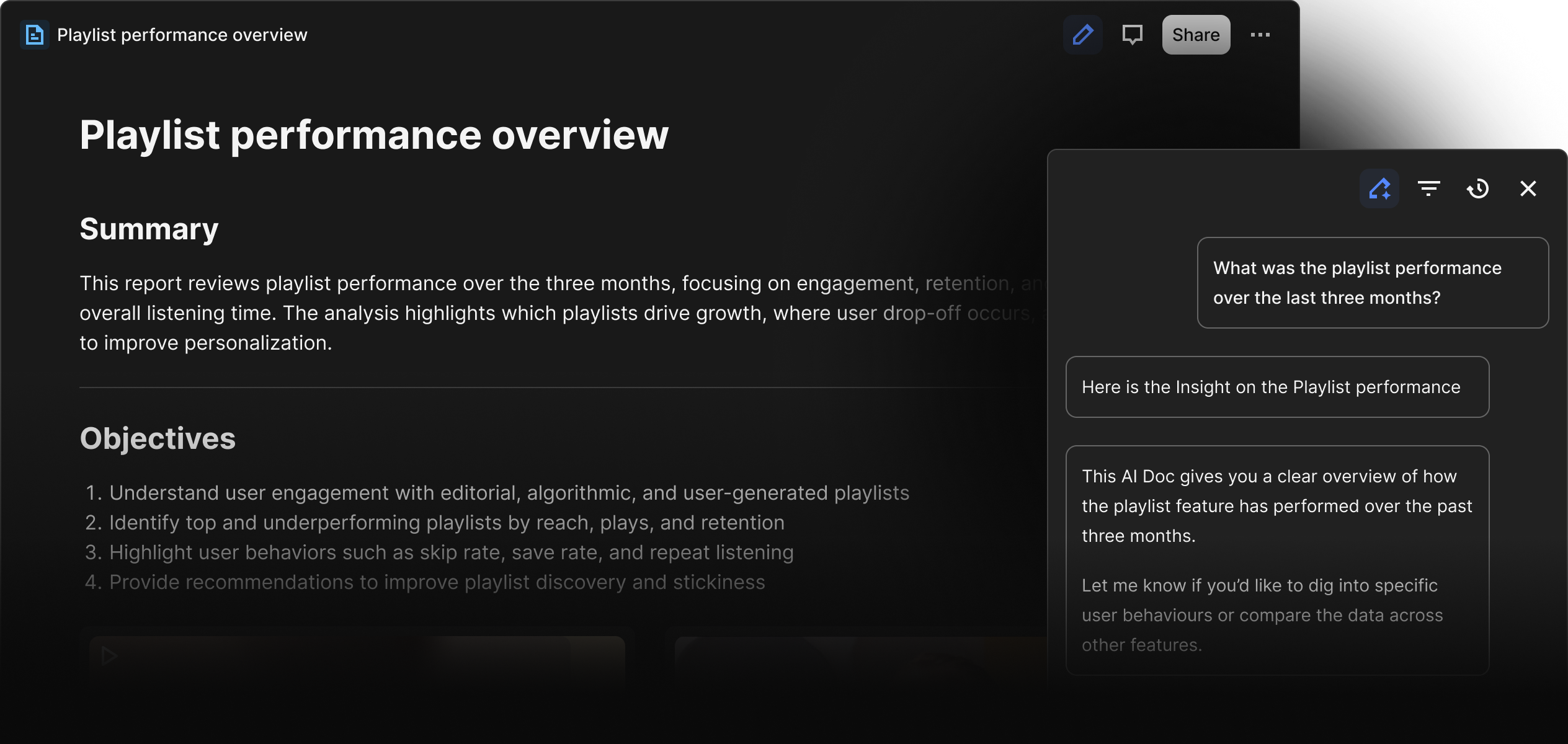
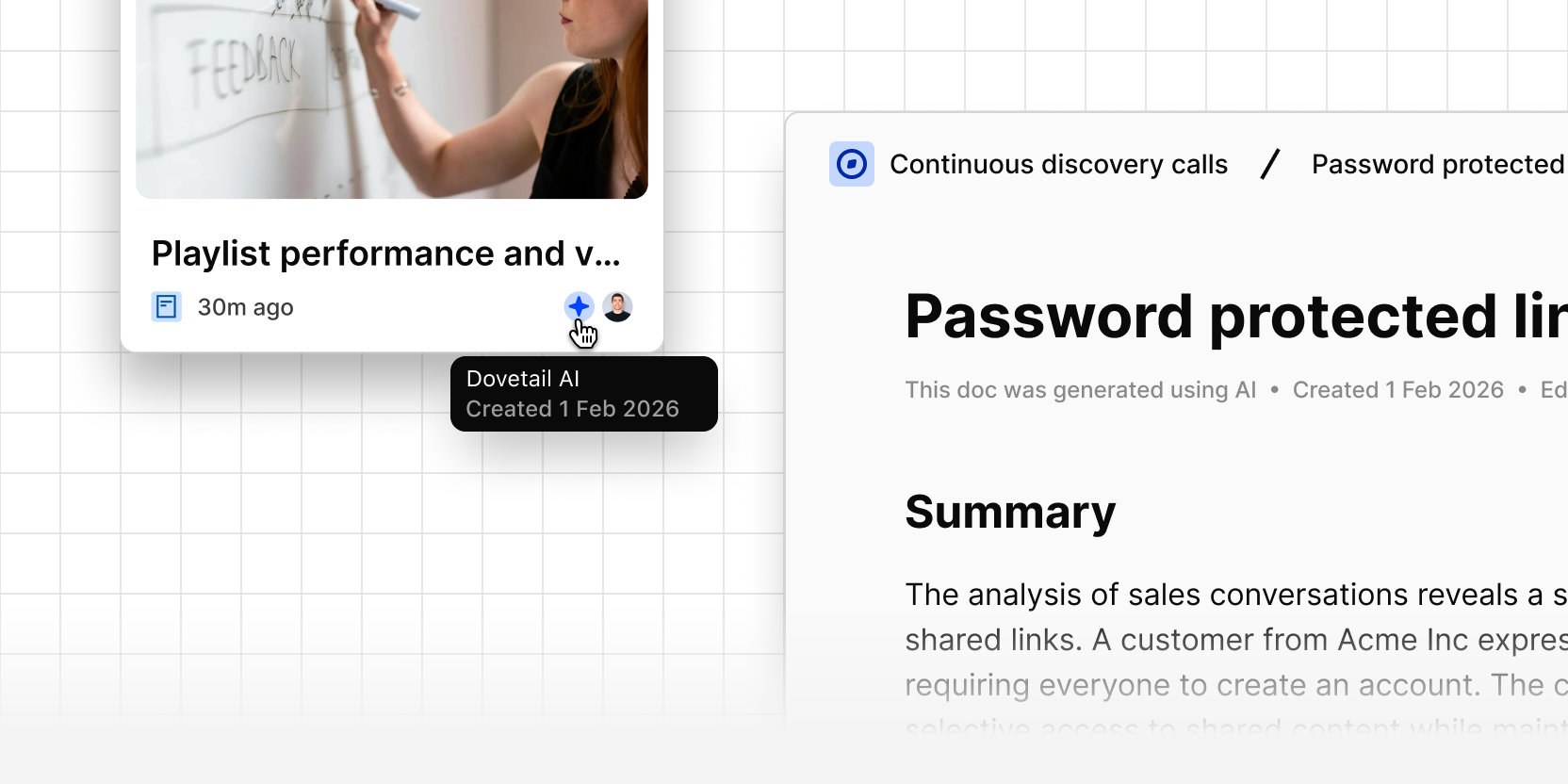
The slowest part of reporting is assembling what you already know. AI Docs generates research summaries and reports directly from your project data—the highlights, themes, and insights your analysis produced. You start from a structured draft grounded in the actual data, then spend your time on judgment: sharpening findings and writing recommendations.
Let every claim show its source
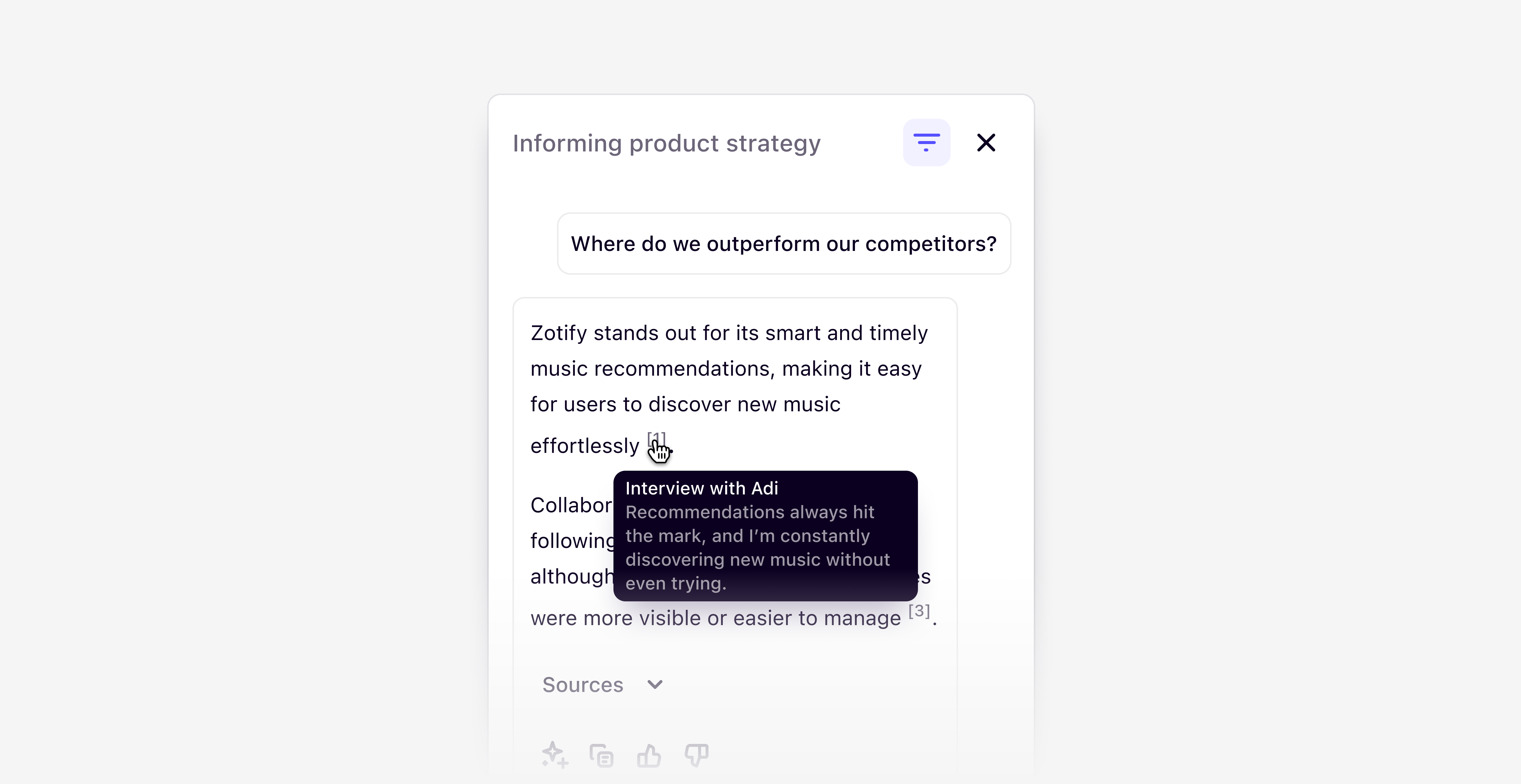
A finding without evidence is an opinion with formatting. In Dovetail, AI-generated content carries citations back to the source—the transcript, the highlight, the ticket—so skeptical stakeholders can click through and check. That traceability is what turns a debate about whose interpretation wins into a conversation about what the data shows.
One study, more than one report
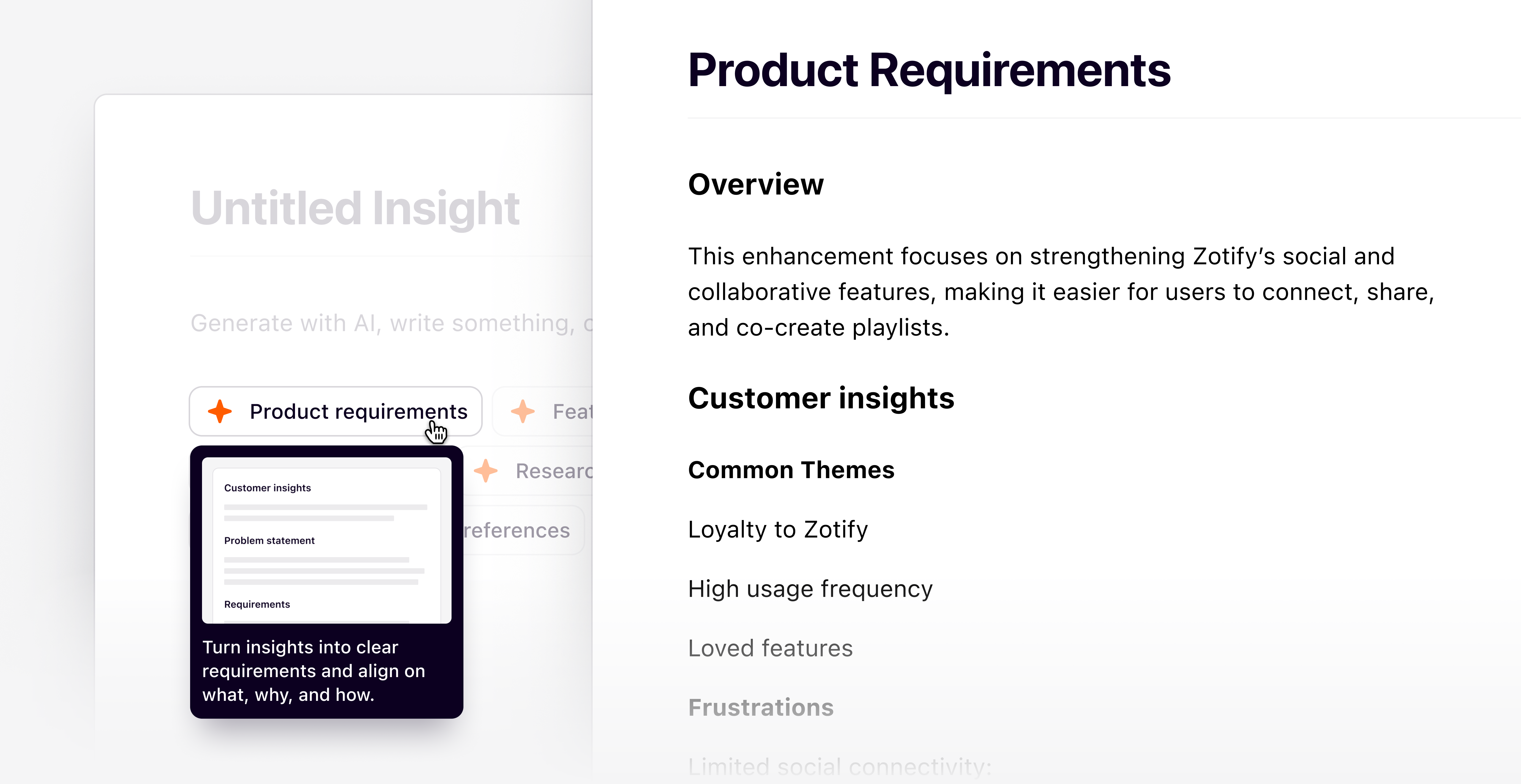
Executives want one page with the decision; your product team wants the detail behind it. Rather than writing one report that serves nobody, generate reports tailored to each audience from the same project—same findings, same citations, different depth. The research gets read because each reader gets the version built for them.
What separates reports that get read
Structure is most of the battle. These three habits do the rest.
Lead with the answer
Put the headline finding in the first three sentences—don’t make readers excavate it
Evidence over opinion
Every claim cites a quote, a clip, or a number a reader can check
Recommend, don’t just observe
End each finding with what the team should do about it, and who decides
FAQs
Six: a summary stating the answer up front, background and objectives, method and participants, key findings, recommendations, and open questions. Keep findings to three to five, each with its evidence attached. Anything longer than the reader needs—full transcripts, discussion guides—goes in an appendix or a link.
As short as the decision allows. A one-page summary with linked evidence beats a forty-slide deck nobody opens. A useful test: a stakeholder should grasp the headline finding in under a minute and reach the supporting evidence in one click.
Lead with the answer, write findings as claims rather than observations, and tailor depth to the audience—executives get the one-pager, product teams get the detail.Distribution matters as much as structure. Reports in Dovetail are searchable and shareable where teams already work, with integrations for Slack and Teams—so findings reach people instead of waiting in a folder for them.
AI Docs builds reports, summaries, and PRDs from your project data—the transcripts, highlights, themes, and insights your analysis produced. Generated content carries citations back to the source, so every claim is traceable. You review, sharpen the recommendations, and share—the assembly work is already done.
An insight is a single evidence-backed finding—one pattern, with the data behind it. A report packages several insights into a narrative for a specific audience, with method, context, and recommendations. In Dovetail, insights are the building blocks; reports are how you deliver them to the people making decisions.