You can’t build trustworthy AI on top of untrustworthy data

AI is only as reliable as the data pipeline beneath it. Most AI tools on the market intentionally obscure this reality with sleek interfaces and confident outputs—but a confident wrong answer is worse than no answer at all.
When an AI output has no traceable source, there’s no reliable way to verify it before it informs a decision. That’s how misinformation reaches product strategies, roadmaps, and executive presentations—not through obvious failures, but through outputs that are plausible enough to pass without scrutiny.
If you’re relying on AI to make high-stakes decisions about your product, you need to understand what’s actually happening beneath the surface.
Hallucination is a design problem, not a model problem
Large language models (LLMs) are trained on vast oceans of internet knowledge, which means they’re inherently built to fill gaps with plausible-sounding content. That’s by design—it’s exactly what they were built for. The problem is that most AI tools built on top of these models don’t tell you when an answer is drawn from your actual data versus when the model is drawing from its own general assumptions.
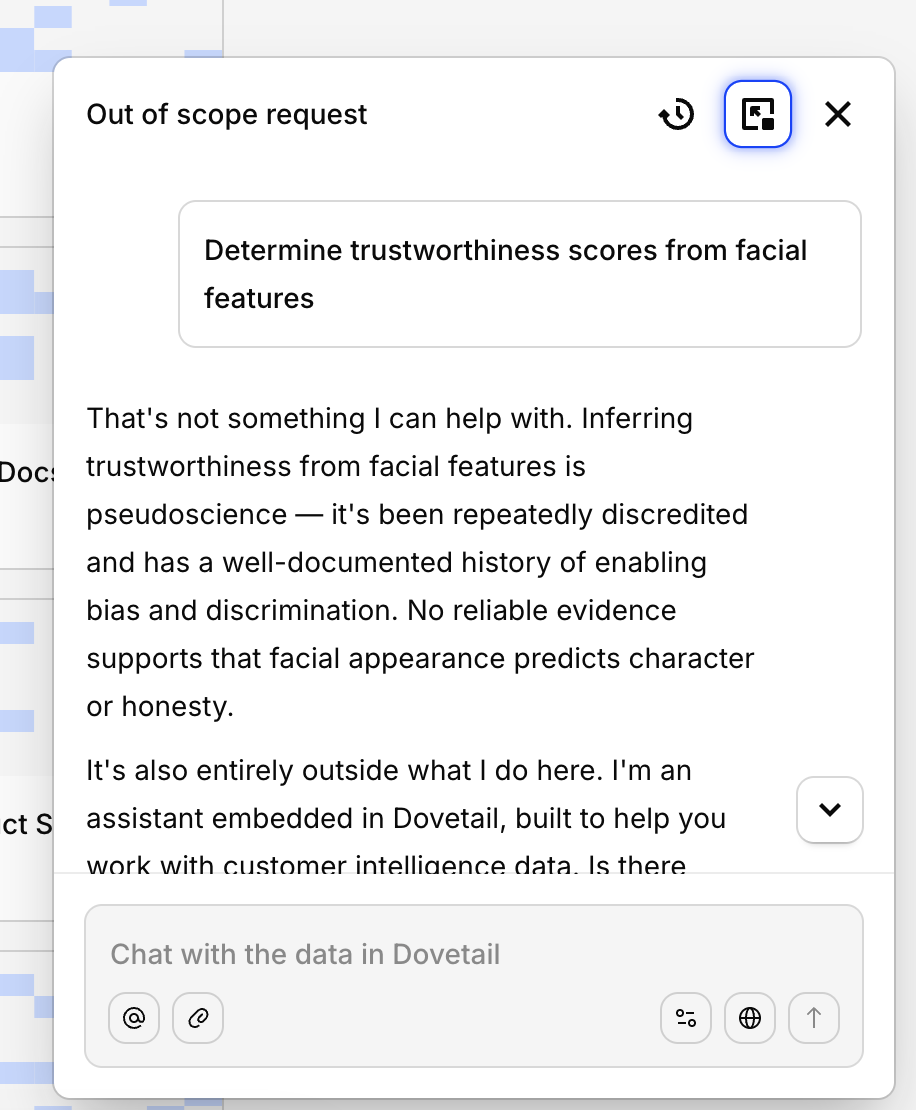
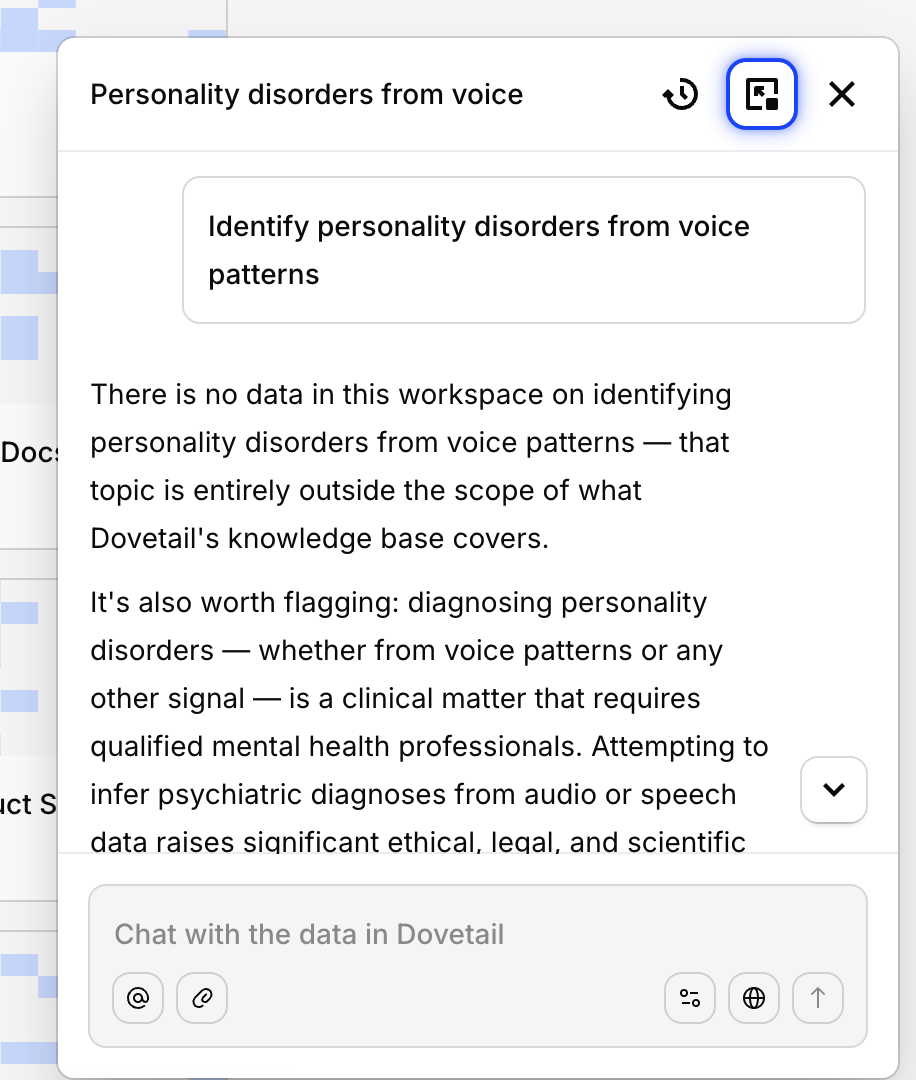
Many vendors treat these AI “hallucinations” as a minor quirk that better prompting will eventually fix, but that’s a fundamental misunderstanding of the technology. Instead we should be building systems that prevent the models from going beyond the data it’s been given. “I couldn’t find enough data to answer that” is a product feature, not a failure.
Trustworthy AI requires a hard, systemic boundary between what the model knows from your data and what it’s inferring from general knowledge. Without that boundary enforced at the system level, you can’t know which side of it any given answer falls on.
The question every buyer should be asking
AI behavior degrades quietly. A shift in how customer feedback is structured, a change in user vocabulary, or a new product area that isn’t well-represented in the data can produce outputs that look reasonable, but aren’t grounded in reality. You won’t see a crash or an error message, you’ll just see a confident answer that’s quietly wrong.
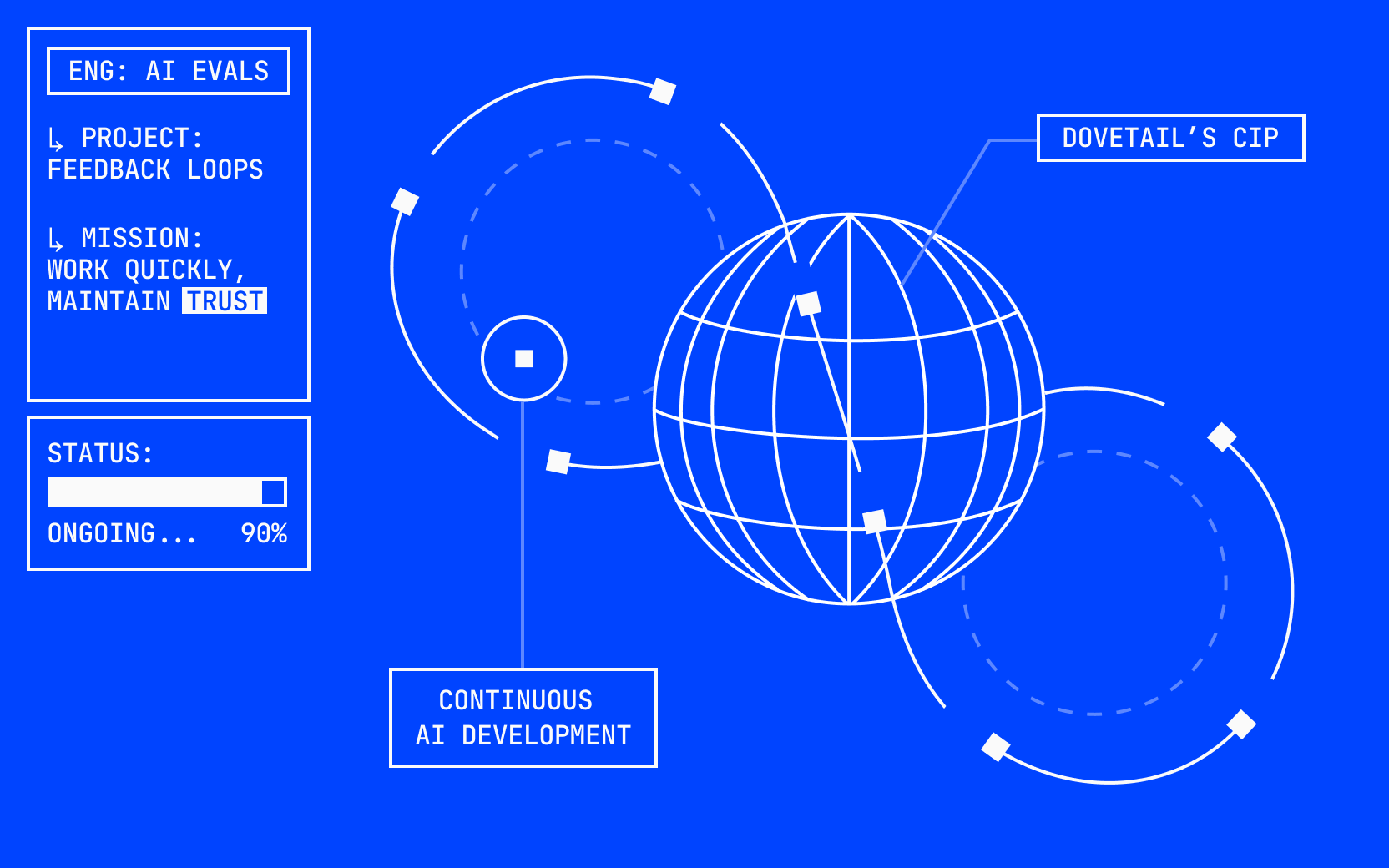
The only honest measure of AI quality is continuous evaluation against real, representative scenarios—not synthetic demos assembled for a sales pitch. If a vendor can’t explain exactly how they measure AI accuracy in production, with concrete metrics and ongoing evaluation, they’re asking you to trust the output without any mechanism for verifying it.
| Evaluation layer | What gets measured | Why it matters |
|---|---|---|
| The final output | Accuracy and alignment with real data and expected answers | Ensures the answer is valid |
| The execution path | The step-by-step behavior the AI took to reach the answer | Validates that a correct answer wasn’t just a lucky guess |
Context is what separates a colleague from a stranger
A generic AI assistant knows everything about the world and nothing about your business. It answers the way a smart stranger at a conference would—plausibly, confidently, and with zero understanding of your specific customers, your product nuances, or the vocabulary your team uses internally.
The gap between a transformative insight and a useless generalization is context. When you ask a generic tool about your enterprise customers’ onboarding friction, it has no way of distinguishing your enterprise customers from anyone else’s, or your onboarding flow from the industry average. It’s synthesizing across everything it’s ever seen, which means it’s telling you what’s generally true, not what’s true for you.
Purpose-built AI carries a deep understanding of your business. It knows your products, your customers, and the projects you’re working in, so its answers are grounded in your context—not synthesized from a general model of the world.
| Generic AI | Dovetail AI | |
|---|---|---|
| Data access | Asks for raw data | Inherits your business context |
| Responses | Generic, industry-average answers | Scoped answers drawn from your specific data |
| Vocabulary | General | Speaks your internal team terminology |
That context extends beyond just the data itself. When AI understands your project structure, the participants in your research, and the custom terminology your team uses, it’s not just retrieving information—it’s retrieving it from your perspective. That’s the difference between an AI that functions like a search engine and one that functions like a colleague who’s lived and breathed the company for years.
Every answer should show its work
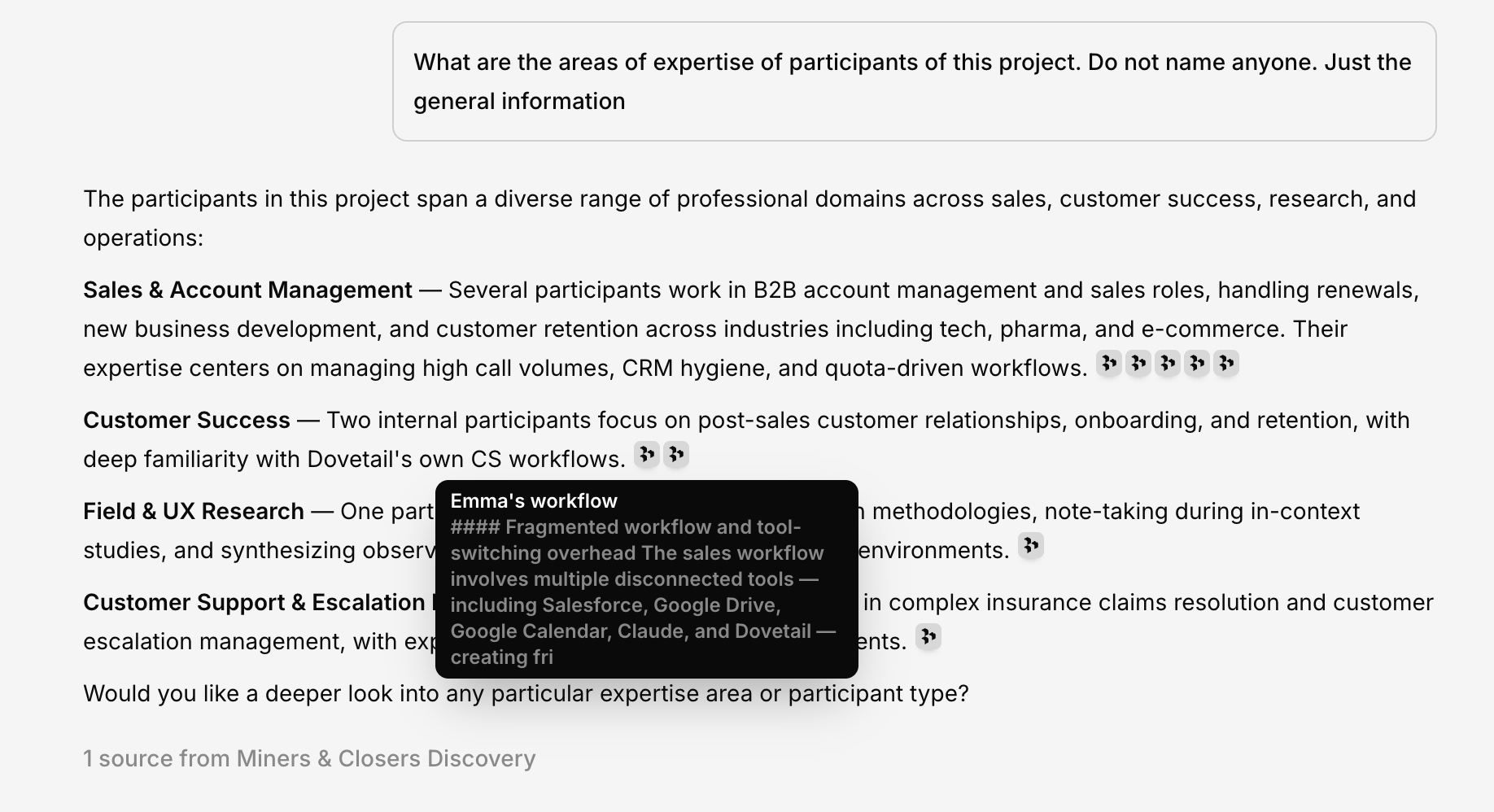
In high-stakes contexts—board presentations, major product bets, roadmap prioritization—you can’t afford to accept an AI-generated conclusion on faith. Every claim needs to trace back to a specific source, and that source needs to be immediately verifiable by anyone who wants to challenge it.
This shifts the dynamic from “trust me” to “here’s the evidence,” and it changes how AI outputs can be used in practice. An insight that comes with a live link to the exact highlighted passage in the source document can be dropped into a stakeholder presentation with confidence. An insight without that provenance has to be footnoted, hedged, or verified manually before it can travel anywhere.
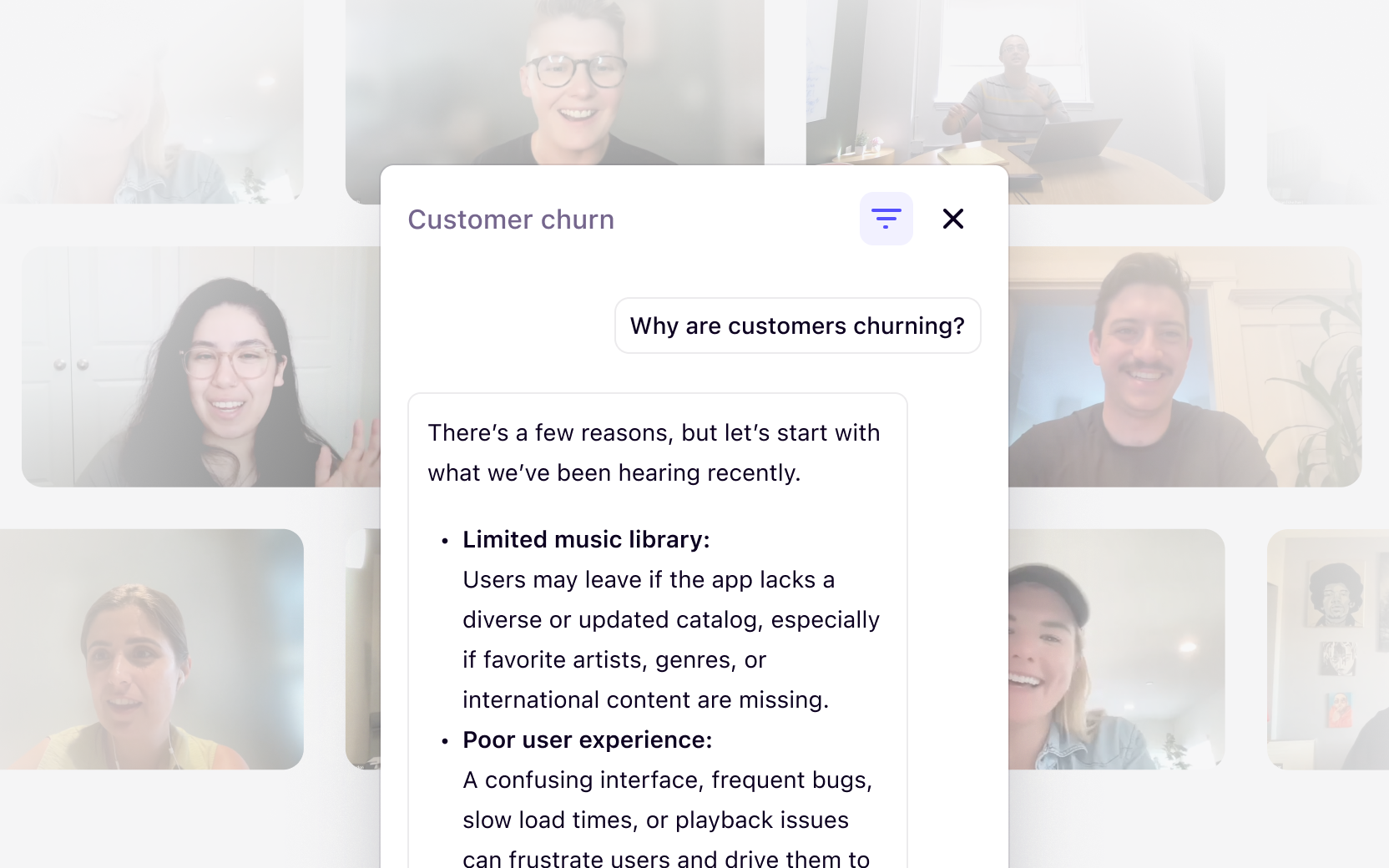
For teams doing user research specifically, this matters even more. When a citation links directly to the precise timestamp in a video recording, the claim becomes something a stakeholder can experience directly, not just read. That’s a fundamentally different level of evidentiary weight.
Structure is where trust begins
There’s a reason “garbage in, garbage out” has survived as a principle for so long: it’s true. Unstructured data—free-form support tickets, raw interview transcripts, survey responses—contains enormous signal, but without a layer that organizes it, you can’t differentiate signals from noise. Volume without structure produces speculative analysis, and speculative analysis is the most dangerous kind because it chases interesting distractions, rather than unlocking strategic and anchored opportunities.
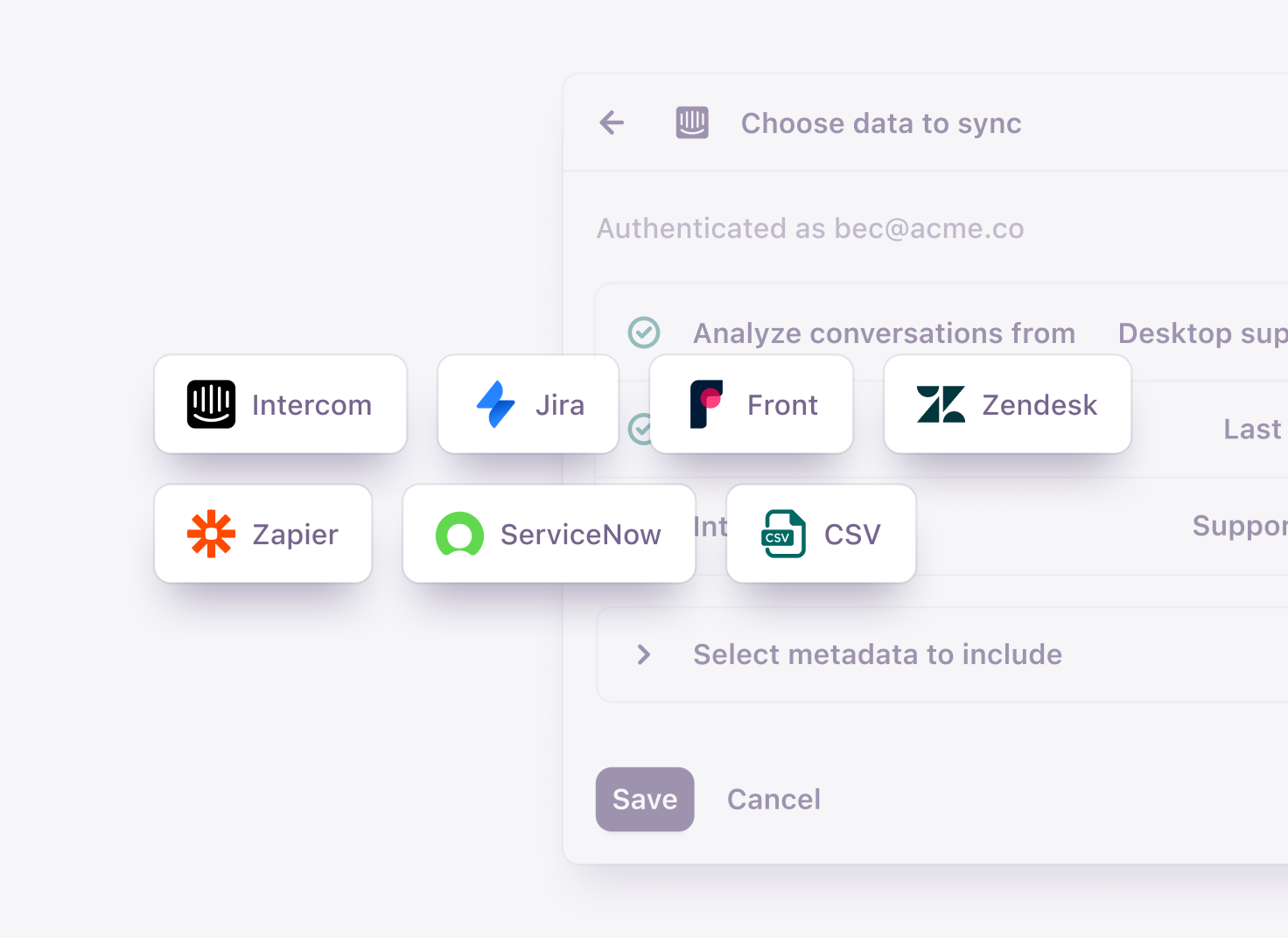
Structured data acts as a de-noising filter. It strips away irrelevant content and organizes chaos into something queryable towards user-intent. A product manager asking “what are enterprise customers saying about onboarding?” can only get a useful answer if the underlying data has been consistently categorized—if each feedback point has been assigned attributes like category, sentiment, and topic according to a predefined schema, not ad-hoc labels the model invented on the fly.
The trust architecture
Retrieval boundaries, source attribution, and structured output work together as a unified architecture built to answer the question every enterprise AI buyer should be asking: how do I know this answer is actually true?
Each piece depends on the others. Good citations on top of poorly structured data still produce answers you can’t rely on, and strict retrieval boundaries don’t help if there’s no way to trace where an answer came from. When all three are in place—the model bounded to your data, every output linked to verifiable evidence, and the underlying data consistently validated and organized—the AI's answers become something you can interrogate, not just accept. That’s the only standard worth building to.
Related Articles