Our Sun’s Out launch: Introducing Digital Twins, agents, Channels 2.0, and new enterprise-grade features
Dovetail’s Sun’s Out Launch ’26 introduces a suite of new capabilities including category-defining Digital Twins to close the gap between customer context and business decisions.
AI is accelerating execution across every function. Teams move faster, release more often, and generate more output with less effort. Yet speed alone isn’t creating better products, better retention, or faster growth.
As people have experimented with general-purpose AI tools, something I’ve heard again and again is that their results are generic and underwhelming. That makes sense. Base AI models are trained on publicly available data and they need a lot of context to do a good job at a specific task.
Take just one example: ‘synthetic users’ or ‘synthetic personas’. I know many teams are trying to create these with generic tools and are underwhelmed by how shallow the output is.
If you think about it for five seconds, it makes sense. Consider hiring a new employee. It takes time to onboard them because they need to learn about your business, market, customers, users before they can do great work.
The same applies to ‘synthetic users’. If you create these with generic AI models, they’ll produce generic AI responses. As long as businesses try to use generic AI platforms to accomplish specific tasks, they’ll guarantee generic outcomes.
Today I’m excited to announce several new capabilities in Dovetail: Digital Twins and AI Agents, Channels 2.0, new first party MCP integrations, and enhanced enterprise-grade features. Together they turn Dovetail into a continuous source of customer context your teams can act on wherever they’re working.
Here’s everything we’ve announced today.
Digital Twins
A year ago at Insight Out 2025 I described a world where all your customer data (videos, documents, and high-volume feedback) lives in a single qualitative data warehouse you can query over and over by talking with a ‘virtual expert’.
I’m excited to share we’ve brought this concept to life and for the first time everyone in your company can directly access your customers on demand via Dovetail Digital Twins. Digital Twins can mimic a specific customer (e.g. Volvo), customer segment (e.g. Free Users, Enterprise), persona, role, or archetype.
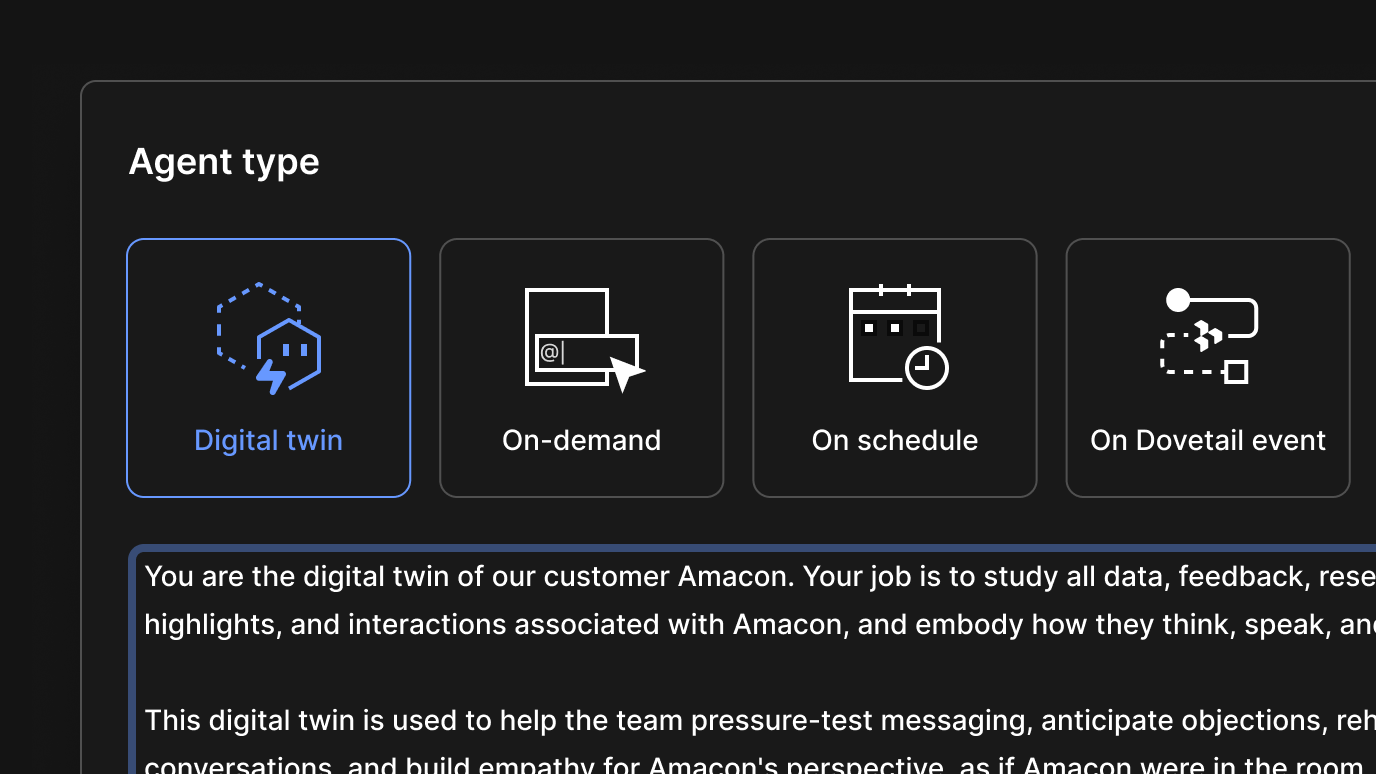
Because Dovetail powers these Digital Twins, they can draw on a rich repository of real interviews, sales calls, app store reviews, CSAT and NPS responses, and support tickets—all indexed, cached, enriched with metadata, and presented in a format the model can process quickly and reliably.
With Dovetail your data—the context—resides in the same place as the AI.
Interacting with a Digital Twin is easy. You and your teammates can talk to Digital Twins directly in Dovetail Chat Slack, or Teams. Ask about pain points, priorities, objections, or reactions to new product ideas and get nuanced feedback at the push of a button, grounded in your real customer data.
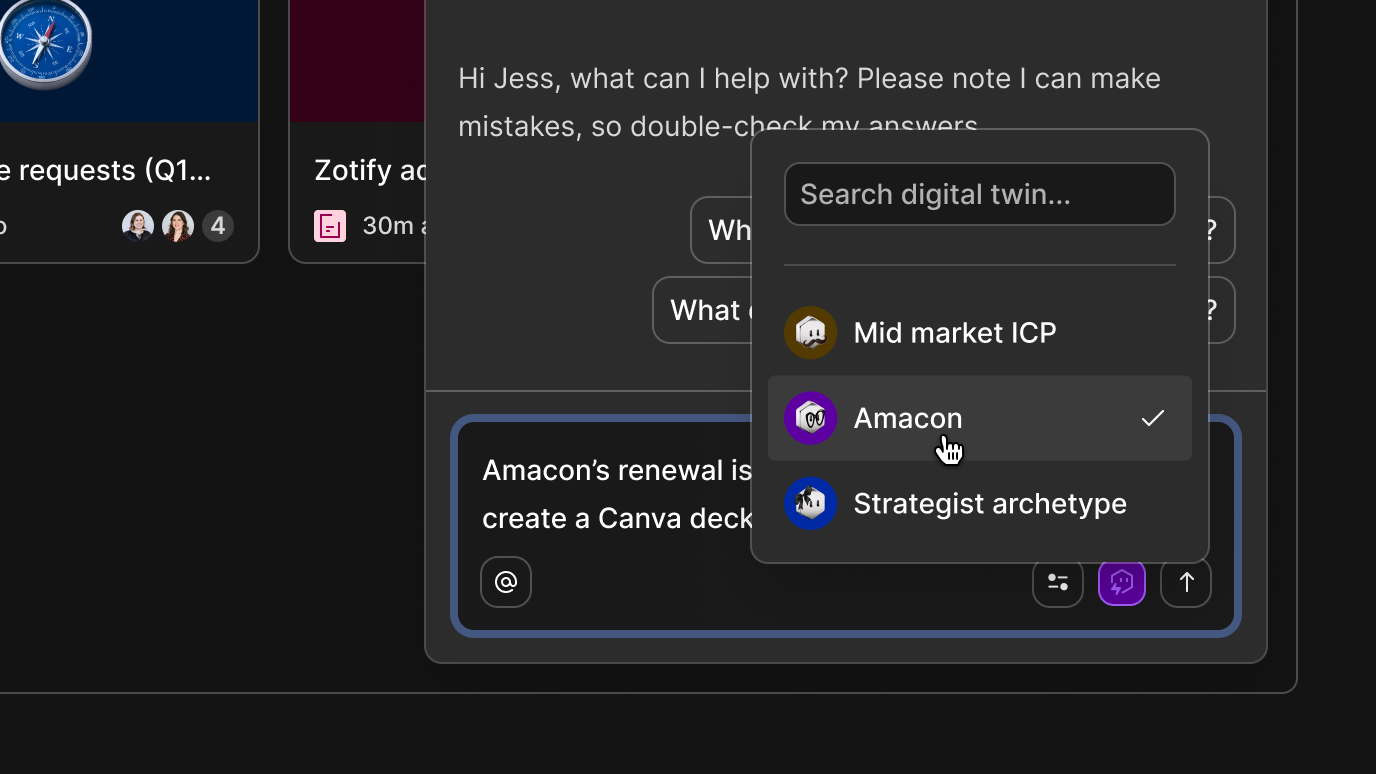
Digital Twins can be pulled up live in meetings or set to run on a trigger providing details on what a customer segment cares about or where competitors are winning. No more losing days tracking down the right people to talk to or waiting weeks for a study to answer a question you need answered today.
Digital Twins are available on all paid plans. Learn more about Digital Twins.
Agents (now in GA)
Dovetail Agents are the teammates you never had the headcount for.
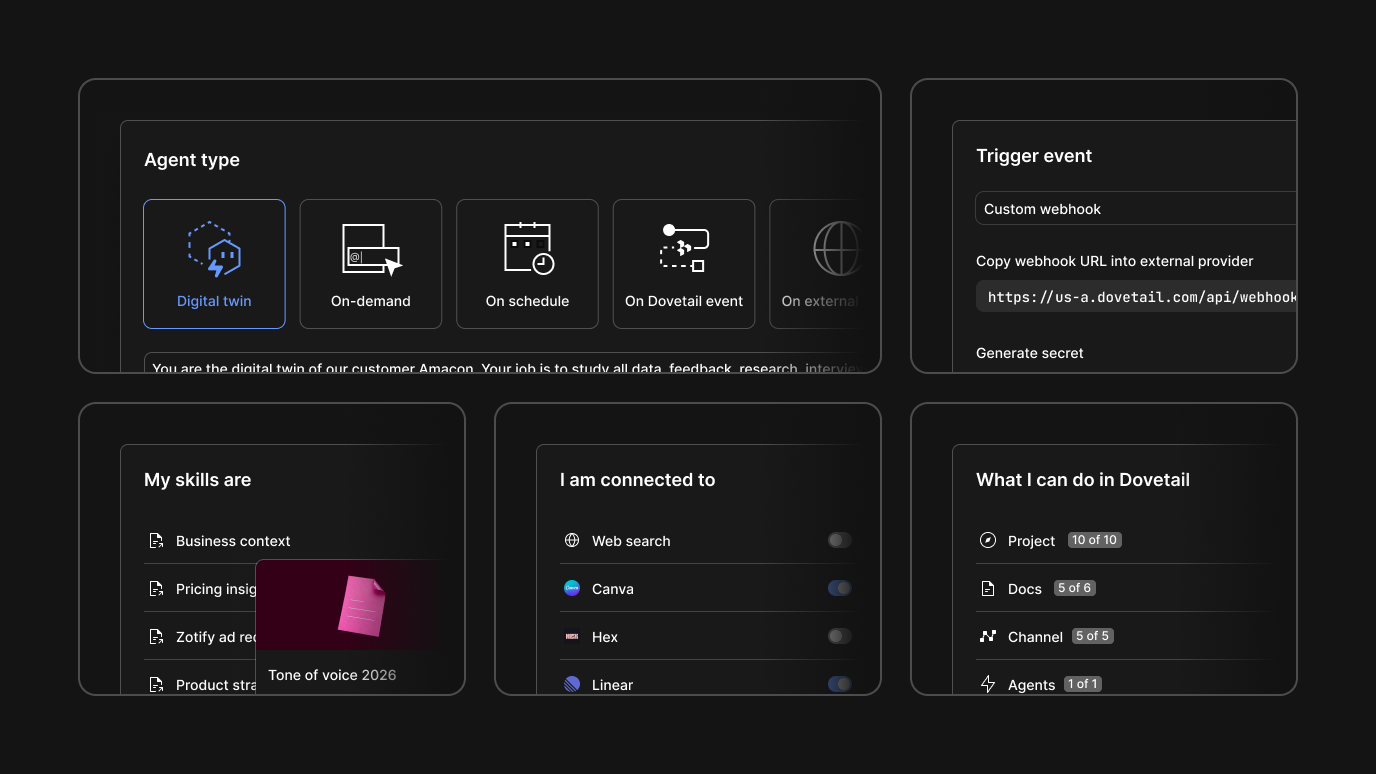
Every Agent you build follows the same simple yet powerful structure: an event-based trigger, an instruction, and the tools and connectors it’s allowed to use. In our GA release you can now trigger agents in six different ways:
- Digital Twins for your team to chat with wherever they are.
- On a set schedule like daily, weekly, or monthly.
- On-demand, triggered via Chat, Slack, or Teams.
- On a Dovetail event, such as a new call or project created.
- An external trigger from another system like Salesforce.
- A custom webhook event you send to Dovetail.
You can now give your Dovetail Agent skills—docs pulled into the Agent’s context to give it knowledge it can’t derive from instructions alone. Their memory improves across each run continuously building on what they’ve learned so they have richer context each time they perform a task.
Every write action an Agent takes such as updating a Salesforce record, sending a Slack message, or opening a Linear ticket can be held until a human signs off, and an Agent can never act beyond the permissions of the person who built it.
We built Agents with teams in mind, not just tasks. Anyone in your organization can access them through Chat, check their outputs, and adjust their instructions while staying in control of what’s delivered.
Dovetail Agents also self-improve over time updating their own skills and context as they learn, whether that’s writing and autonomously updating Docs that serve as shared context for the whole organization, or refining how they approach a recurring task. Every piece of context is traceable back to a real call, ticket, or session, so what you have is always true and current.
Here are some ways we’re already seeing Dovetail Agents pulling their weight across teams:
- Product management. Before a roadmap review an Agent shares a summary of whether the evidence backs the top three projects drawing on data from Dovetail and Salesforce.
- Product design. Validate new concepts against a Digital Twin of a power user built from every session and interview they’ve taken part in.
- Product marketing. Keep competitor battle cards current automatically pulling what customers say on calls, how reps position against rivals, and public intel from the web, so reps walk into every deal current.
- Customer success. A CSM tells an agent: “if more than five customers mention billing confusion in a week, summarize it and send it to the Head of Product in Slack.” It fires mid-week, before the CS team even files a ticket.
AI Agents are available on all paid plans. Learn more about AI Agents.
Channels 2.0
Building fast is no longer an edge alone. These days product teams also need to ensure what they’re building is massively differentiated and exceeds customer requirements to beat the competition.
Dovetail Channels automatically analyzes high-volume, qualitative customer feedback to help product and voice of customer teams build the best products.
Since launching 1.0 we’ve classified over 60 million data points of customer feedback like support tickets, app reviews, surveys, and sales calls. Channels 2.0 evolves the product from just synthesizing data to taking action generating revenue-weighted, evidence-backed ideas your team can build straight away.
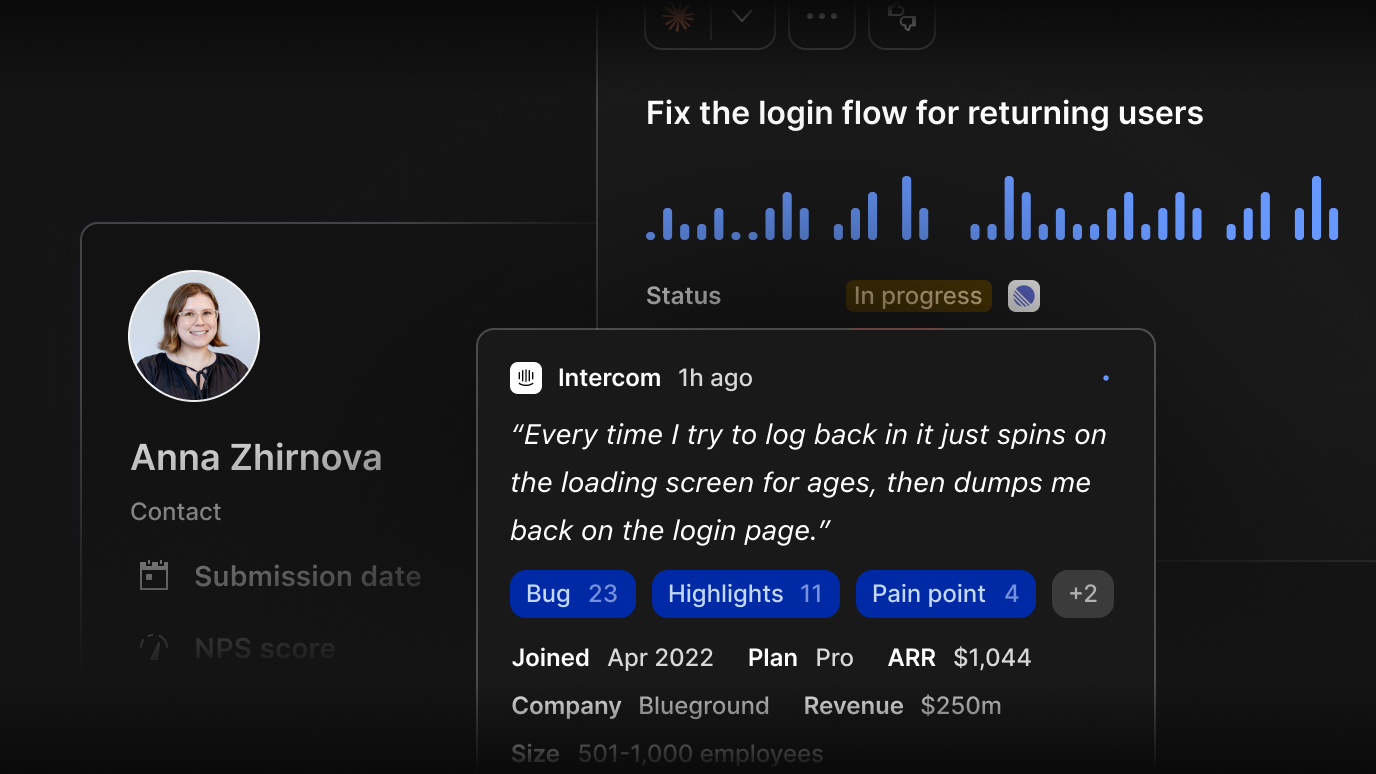
Centralize and automate customer feedback analysis
Channels 2.0 pulls high-volume, qualitative customer feedback in automatically across more than 30 first party integrations like Gong, Intercom, Salesforce Service Cloud, and Qualtrics so nothing slips through the cracks providing your product team with a complete, 360 degree view of all customer interactions.
Ideas, backed by customer evidence
Channels 2.0 uses AI and the context in Dovetail to generate ideas for how you can improve your product or service based on real customer evidence as well as enrichment data from your CRM like Salesforce and HubSpot, so you know which customers shared feedback, which accounts are affected, the ARR at stake, and whether demand is growing or fading.
Product, support, sales, and customer success all on the same page
Instead of feedback getting stuck in the separate tools each team uses, anyone can view, react, comment, and vote on ideas, putting real commercial weight behind what matters most, and giving your product team direct signals about what customers care about. Every idea moves through a workflow from ‘Surfaced’ to ‘Resolved’ so everyone sees the same status, at the same time.
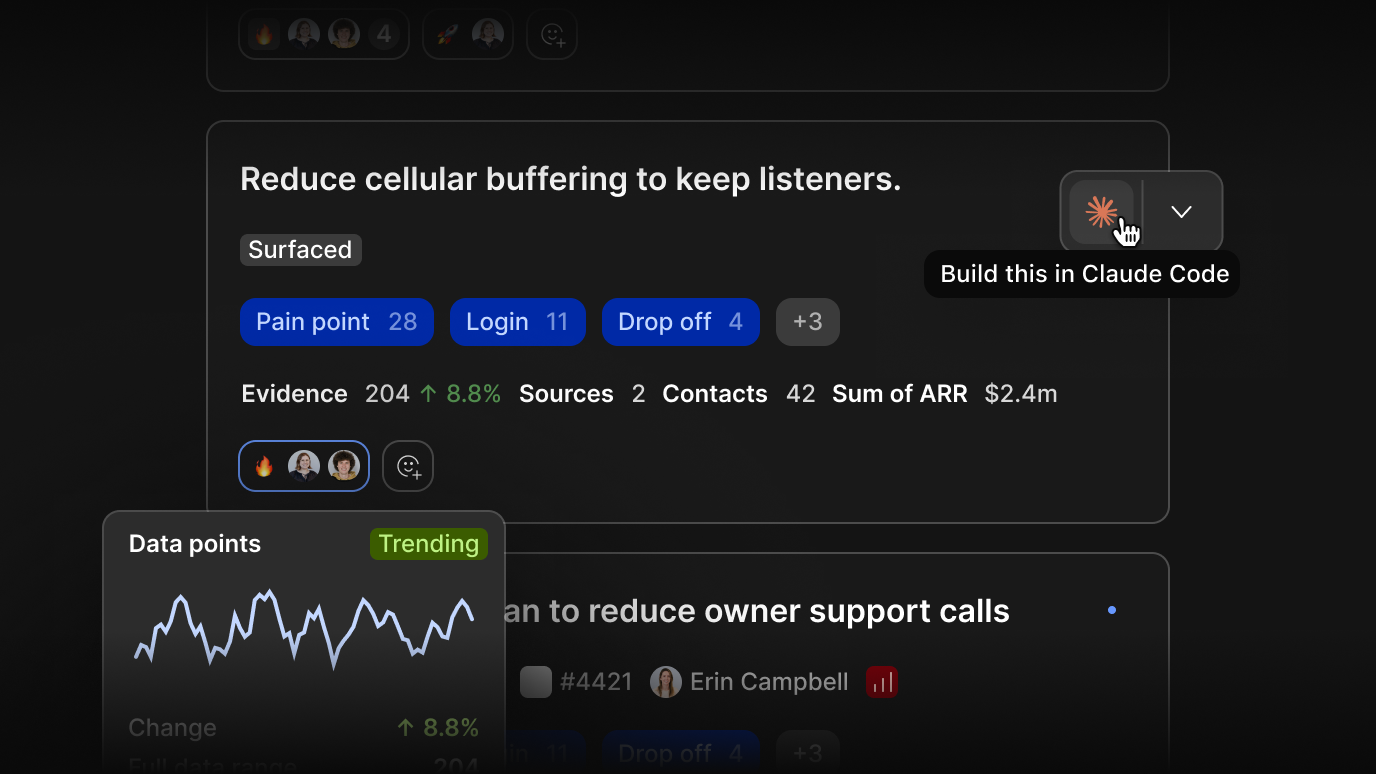
Go from customer feedback to code in one click
When you’re ready to build an idea, in one click you can now send that context and evidence straight into Claude Code or Cursor to start building, or add it to a ticket in Linear or Jira. Enable your engineers or coding agents to build with the full context of customer requirements.
Closing the loop with feedback reporters
Channels 2.0 now enables your team to close the loop on the other end: once an idea moves to Resolved, Dovetail can surface the customers who raised it and draft a personalized follow-up email, so every customer feels heard, loyalty builds, and feedback keeps coming in.
Channels 2.0 is available in closed beta. Sign up to the waitlist.
18 new integrations
Our company mission is to improve the quality of every thing, and we believe teams who listen to their customers will build great things. To make that easier than ever, we now have over 40 first-party integrations to ensure Dovetail connects to wherever your team works. Our 10 new integrations:
- Qualtrics
- Salesforce Service Cloud
- Pendo
- PostHog
- Sprig
- Usersnap
- Snowflake
- ServiceNow
- HubSpot
- SurveyMonkey
We’ve also launched eight new first-party MCP (Model Context Protocol) connectors for Dovetail Chat and Agents:
- Canva
- Linear
- Hex
- Salesforce
- Slack
- Notion
- Gmail
- Snowflake
On top of that, Custom MCP support enables your team to connect Dovetail with virtually any tool in your stack, so insights aren’t lost anywhere.
And with Dovetail’s MCP now available on the connector marketplaces for Claude, ChatGPT, Figma, and Microsoft Teams and Copilot, insights are in the tools your team is already using. Dovetail’s MCP will shortly also be available on Amazon Quick Suite.
Here are some ways we’re seeing these new MCP connectors being used:
- A product manager taking a customer complaint to PRD. A PM asks Claude for the top checkout complaints and gets one cited answer straight from Dovetail—already centralized and structured across every source, no digging through Salesforce or Intercom—then turns it into a scoped PRD in the same conversation without waiting on a researcher.
- Sales and CS bringing evidence into Salesforce. Sales or CS ask @Dovetail in Slack what a key account has said about pricing or competitors and get back transcripts and timestamped videos—evidence that drops straight into the Salesforce account record, no hunting through call recordings.
- Revenue operations building targeted outbound campaigns. A RevOps lead targets a specific pain point—say, Heads of Product struggling to build roadmaps with no certainty of what customers asked for—pulls the evidence from Dovetail, cross-references the right accounts in Salesforce, and hands both to their outbound tool to draft sequences.
- Engineers shipping fixes without delay. Investigating a bug, an engineer asks Cursor what customers have said about the API error and ships the fix with the urgency clear—without leaving the editor or waiting on a Slack reply.
Drive decisions across your whole enterprise
Dovetail earns its way into the largest, most regulated organizations with strong guardrails to clear your security review and IT approval process.
It starts with governance. ISO 42001 certification the international standard for responsible AI management, gives legal and compliance teams a globally recognized bar to sign off against.
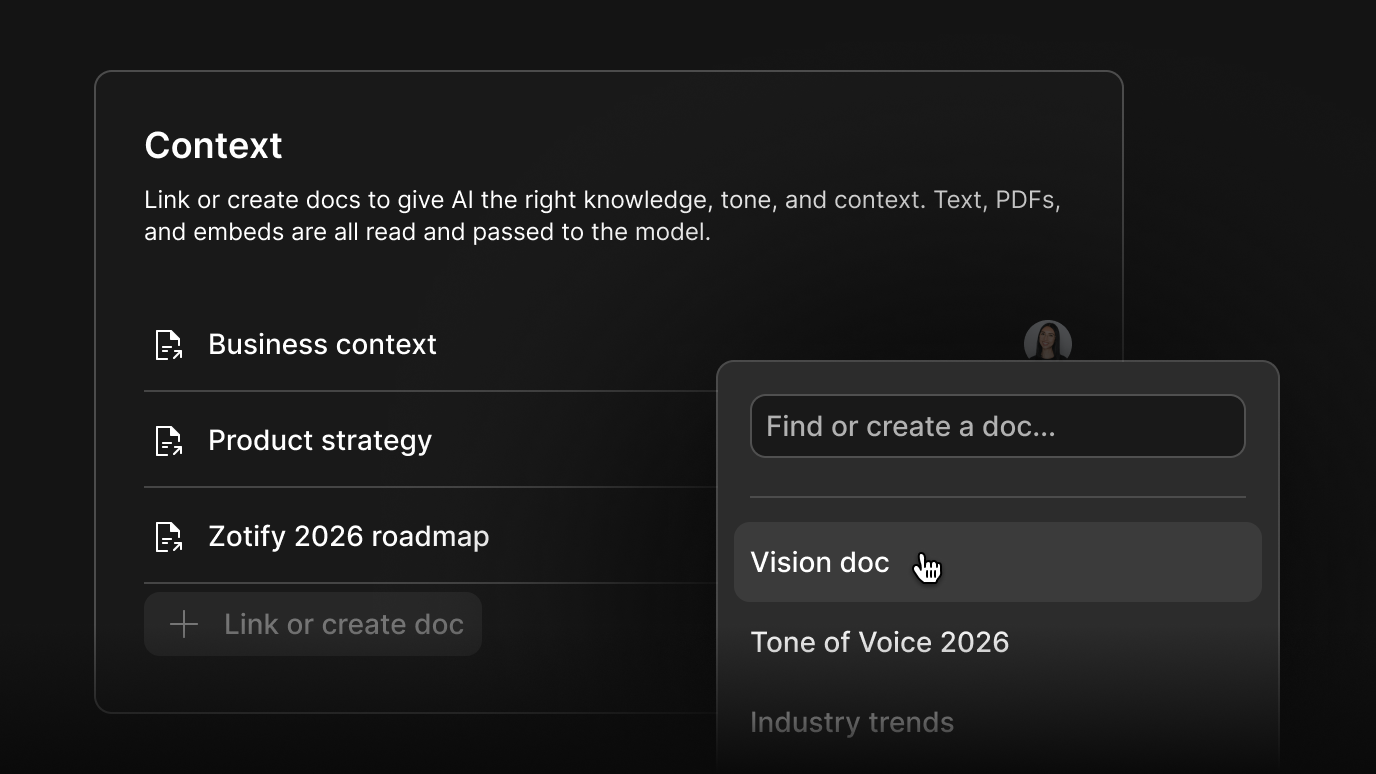
Workspace context sets AI context globally across a workspace, or locally within a single project or channel—company strategy, brand guidelines, and compliance standards—so brand consistency holds at scale.
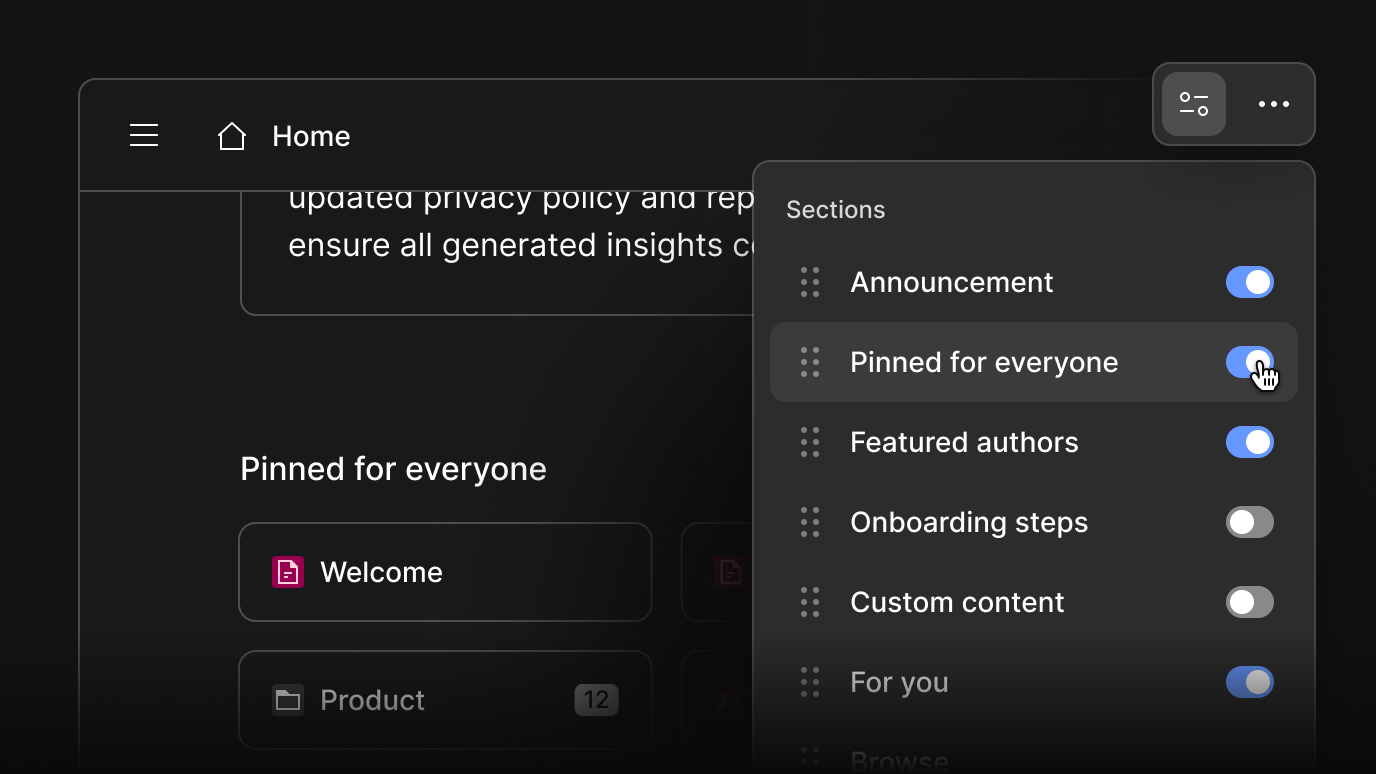
Standardization keeps it all together with a custom home that shapes what a team sees when they land in Dovetail. Templates, global fields, and tags ensure every team, everywhere, is working from the same playbook.
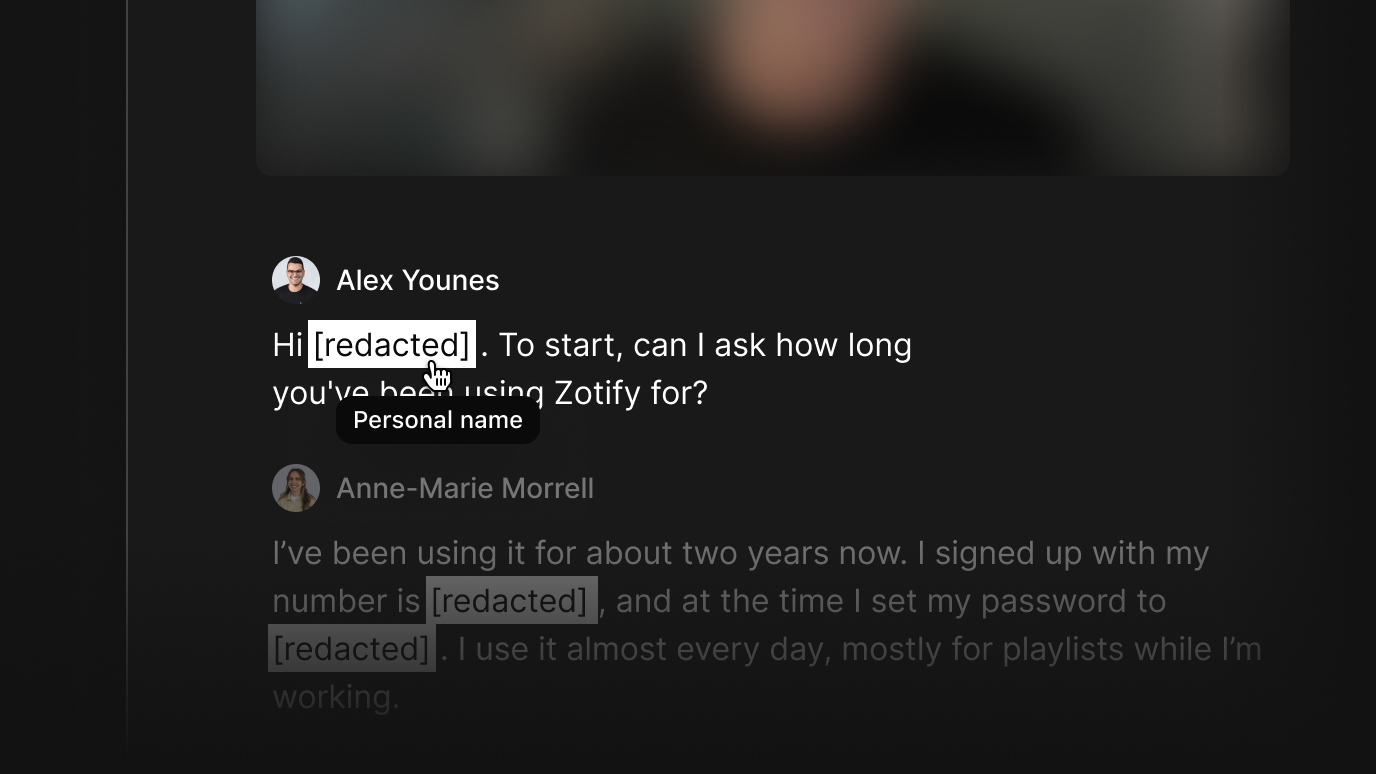
AI redaction protects sensitive data automatically. Set it to Suggest and Dovetail proposes redactions—blurring a face, muting a name, masking an account number—for a human to approve; set it to On and it applies automatically; or switch it Off. Admins define what counts as sensitive with an editable prompt and an explicit always/never list, so the standard holds across the workspace.
Custom data retention works at both the workspace and project level, with project-level rules taking precedence. Set how long Dovetail keeps data before it automatically expires, and anyone affected gets a heads-up seven days before deletion. Version history shows who changed what in Docs and lets teams roll back anytime.
Together, these are what let you roll Dovetail out safely organization-wide.
Get started today
We’re excited to bring you all these new features across our platform with even more coming soon. The future is bright for customer intelligence.
Book a demo to learn more about these new capabilities.
Related Articles