
CUSTOMER / A GLOBAL POS AND PAYMENTS PLATFORM
How a global POS and payments platform unified five product verticals under one customer intelligence layer
When multiple product verticals were each running research in isolation and teams were turning to ungoverned AI tools for analysis, a global POS and payments platform built a shared customer intelligence layer in Dovetail—giving product managers and designers across the entire business direct access to the customer signals that once lived only in researchers' notes.

120
contributors across research, product, and design teams
50%
seat growth as adoption spread beyond the core research team
5
product verticals unified in one customer intelligence layer
The best never guess
Discover how Dovetail can help your team turn customer feedback into decisions.
Customer intelligence across five product verticals and 100+ countries
A global POS and payments platform trusted by hundreds of thousands of merchants across retail, hospitality, and golf in more than 100 countries. Its software runs point-of-sale terminals in restaurant kitchens and golf pro shops, the payments layer that processes transactions at the counter, and the back-office tools that help merchants manage inventory and staff. Five distinct product verticals—hospitality, retail, golf, payments, and the core platform—each serve different merchant categories with their own product roadmaps, their own research teams, and their own ways of working.
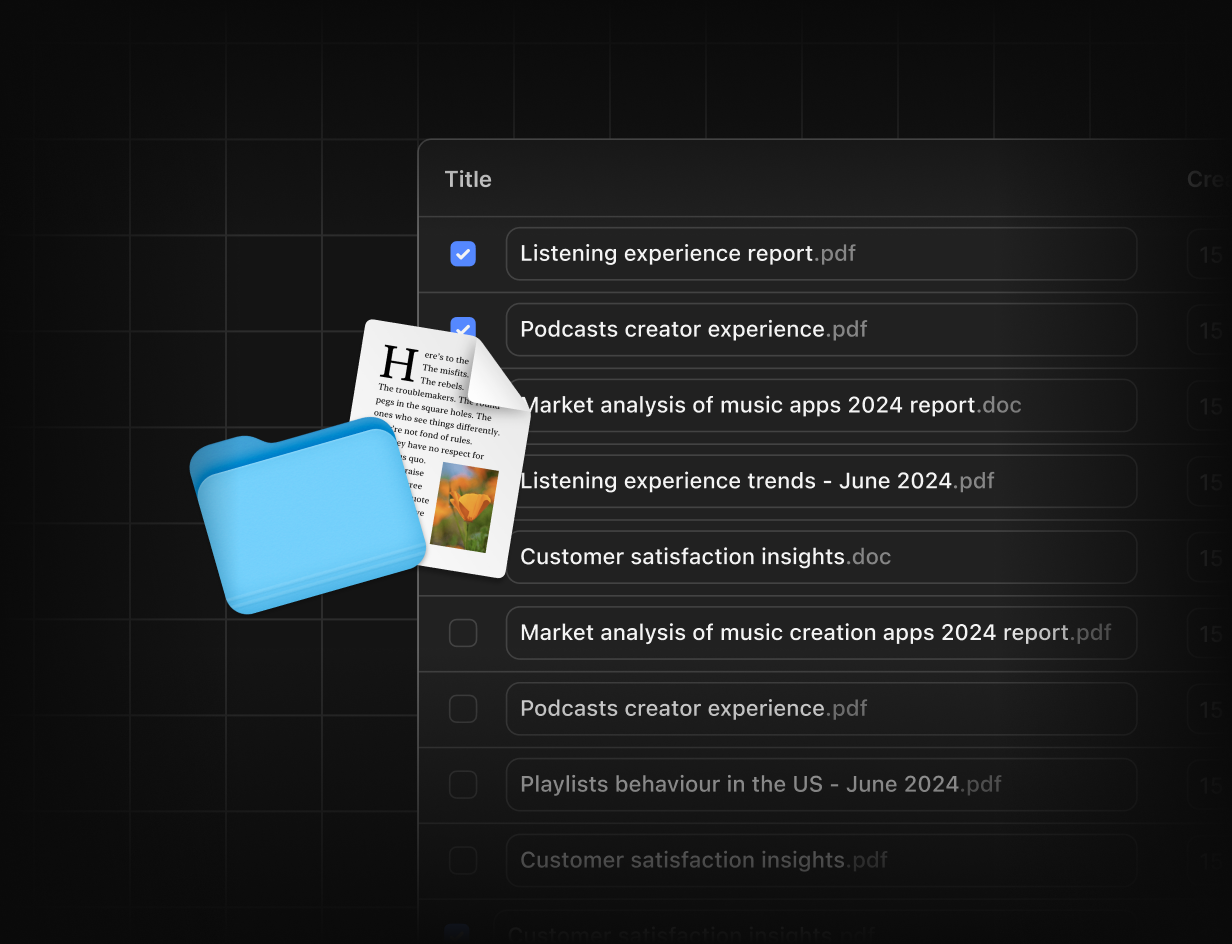
That breadth is a competitive advantage. It's also a coordination problem. Customer intelligence was being generated across all five verticals: interview recordings, usability sessions, panel studies, prototype tests. But most of it lived on individual researchers' drives or in shared Google folders that nobody outside the team could navigate. When a product manager needed evidence to back a design decision, the insight was usually in someone else's folder, labeled in someone else's naming convention, inaccessible.
Today, Dovetail serves as this platform's shared customer intelligence layer across all five business units. The path to get there started when the research operations team realized the problem wasn't just about organization—it was about governance.

The challenge: hundreds of folders, inconsistent standards, and AI analysis nobody could see
When the UX Research Ops Manager began auditing the Dovetail workspace, the structural problem was already clear. One regional team had accumulated more than 20 research folders on its own. Across all five verticals, there were hundreds of folders with inconsistent naming conventions, project templates that had multiplied beyond any standard, and field names that meant different things depending on which team had created them.
That was the organizational problem. The more urgent one was what was happening outside the platform. Designers and product managers across the verticals had started running their own analysis using AI tools that lived outside Dovetail. Nobody could see the prompts being used. Nobody could check the outputs. And when those outputs fed product decisions, there was no citation trail and no way to verify which customer data the AI had actually drawn from.
"When I can't see what they're doing and everyone's using different prompts, we just open ourselves up to more mess."
— UX Research Ops Manager
Research was happening at scale. It just wasn't happening in a place where it could be shared, verified, or built on.
The solution: standardized, cited, and AI-powered across every vertical
The research operations team's answer was methodical. First, rebuild the Dovetail workspace: standardize folder structures across all five verticals, consolidate project templates, and establish field naming conventions that would hold across hospitality, retail, golf, and payments. Then build the training program that would bring designers and product managers into the platform rather than around it—moving from ungoverned experimentation to cited, reproducible analysis.
The turning point came through Dovetail's AI Agents. The Head of UX Research built an agent to deliver automated daily summaries of an active research project, receiving a structured digest of findings without querying the data manually. The experience showed that Dovetail could work proactively, surfacing customer signals before anyone had to ask.
"Dovetail's the central customer intelligence platform that can really help us democratize access to insights and improve research velocity."
— Head of UX Research
The payoff: 80 researchers become 120 contributors, with merchant feedback crossing every vertical
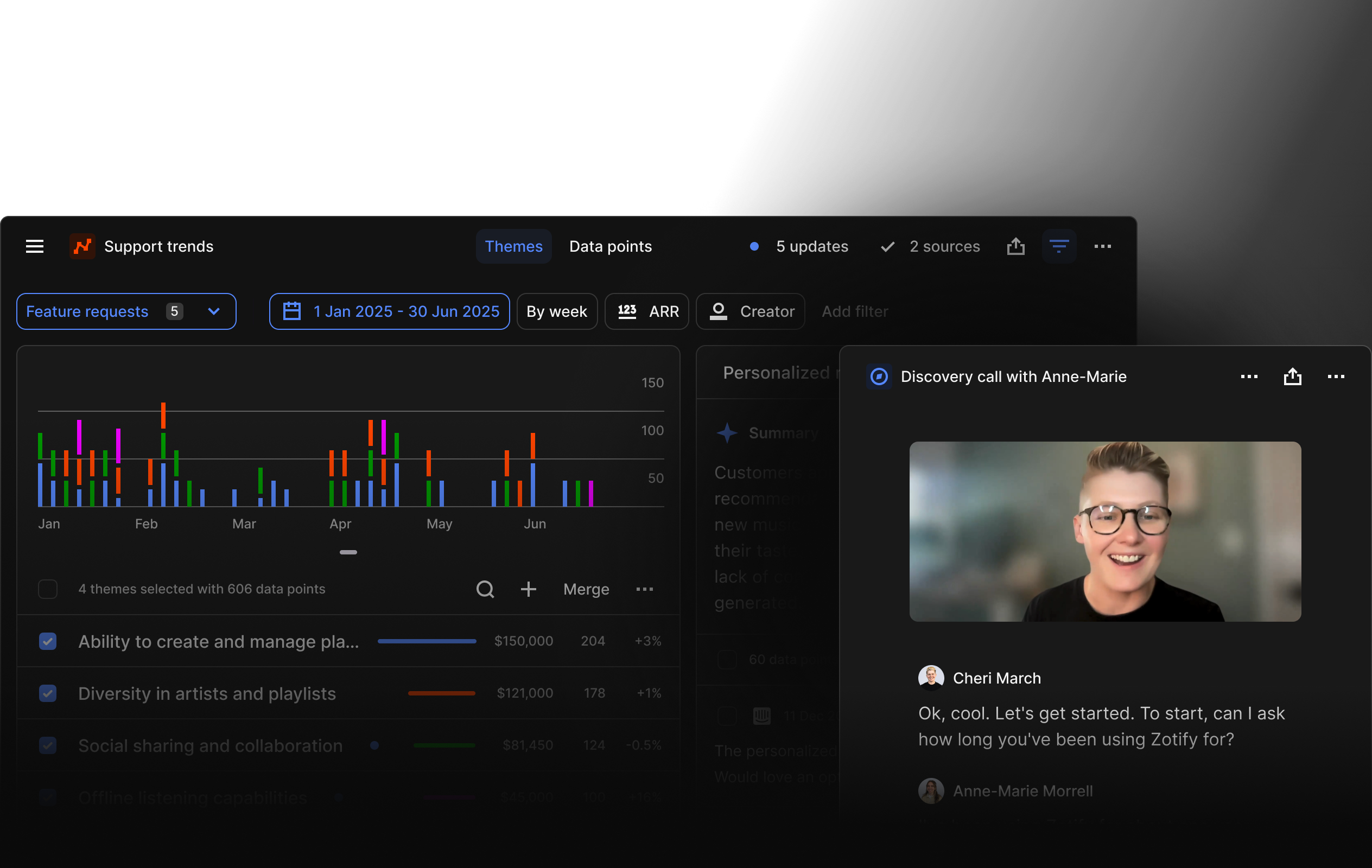
The seat expansion tells the story. When the company first adopted Dovetail, the platform served a core group of 80 UX researchers. Today it has 120 contributors, with designers and in-squad product managers across every vertical joined as active participants rather than occasional observers.
That shift changes what customer intelligence means at this organization. A product manager in the hospitality vertical can search for merchant feedback without booking time with a researcher. A designer working on payments can pull context from usability sessions they didn't attend. Research that once lived in one team's corner of the business now travels to the people making product decisions.
What they have is rare: a Customer Intelligence Platform that compounds in value the more it's used. Research that once required knowing the right researcher to ask is now self-serve. Customer intelligence that once belonged to one team now belongs to the whole business—and it's already working.

The best [] never guess
Discover how Dovetail can help your team turn customer feedback into decisions.



FAQs
Yes. A business can standardize folder structures, project templates, and field naming conventions across every product vertical it runs, replacing hundreds of inconsistently organized folders with one shared structure. One of our customers used this to unify five verticals, from payments to hospitality to golf, under a single customer intelligence layer.
Dovetail keeps research analysis inside one platform instead of scattered across outside AI tools that nobody else can see into or verify. That shift is what let one of our customers move from ungoverned experimentation, where AI outputs had no citation trail, to cited, reproducible analysis the whole team could trust.
Yes. Using Dovetail’s AI Agents, the Head of UX Research at one of our customers built an agent that delivered automated daily summaries of an active research project. A structured digest of findings arrived on its own, without anyone needing to query the data manually.
Yes. A product manager can search for merchant feedback without booking time with a researcher, and a designer can pull context from usability sessions they didn’t attend. Research that once required knowing the right person to ask becomes self-serve.
For one of our customers, seat count grew 50%, from 80 dedicated researchers to 120 active contributors, as designers and product managers across the business gained direct access to customer intelligence.