What’s the best way to generate customer intelligence at scale?
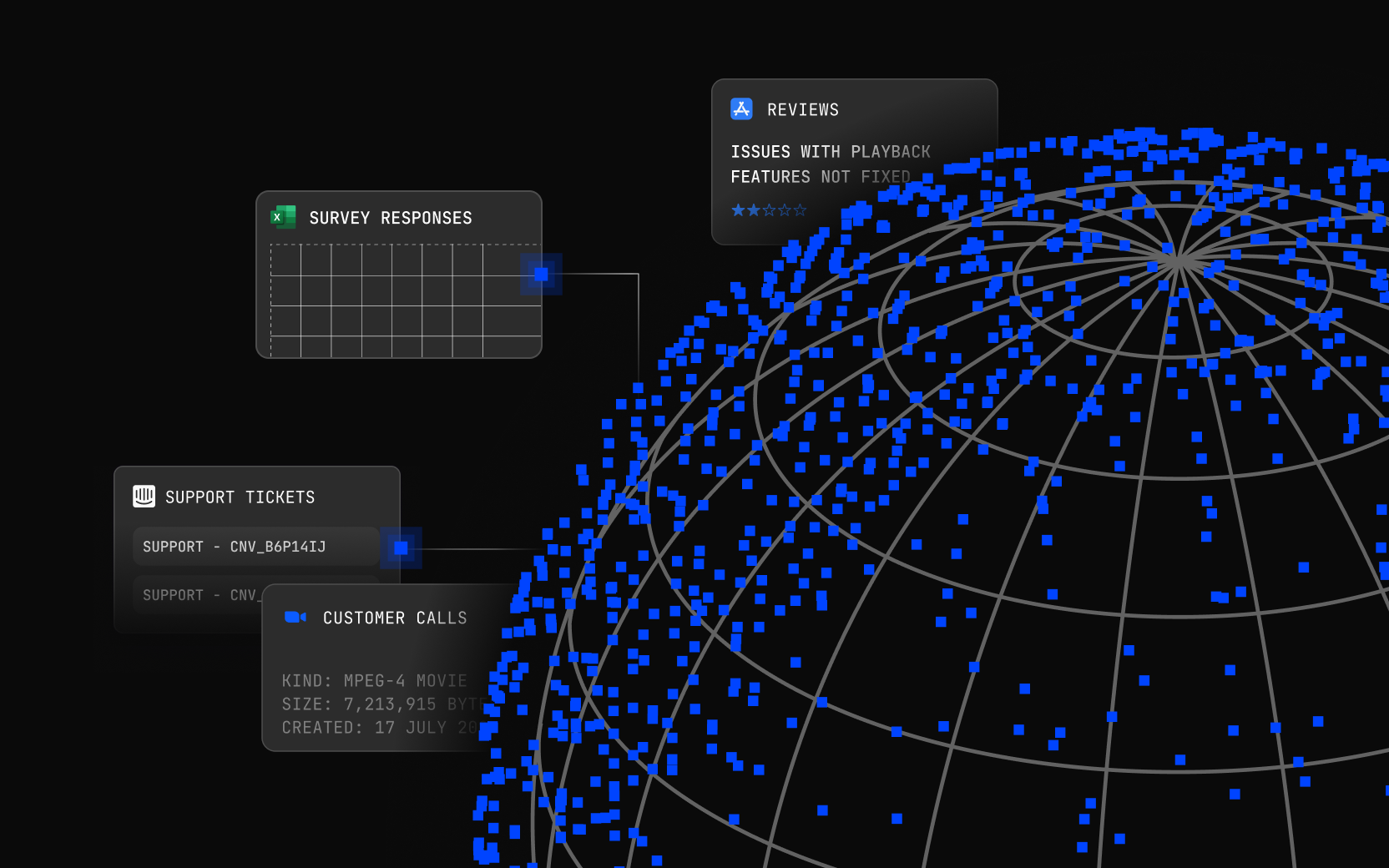
Generating customer intelligence at scale means turning every customer interaction—support tickets, sales calls, customer interviews, app reviews, and feedback surveys—into decisions that drive business success.
Large organizations with complex streams of feedback generate customer intelligence by consolidating unstructured data into a single source of truth, using automation to surface patterns in real time, and embedding those insights directly into roadmaps, workflows, and campaigns.
Customer intelligence is collaborative intelligence. Teams can jointly derive meaning and coordinate decisions from shared insights using a centralized platform. A customer intelligence platform lets every team in an organization, from product and design to marketing and sales, leverage intelligence to make decisions that are backed by actual customer needs and trends.
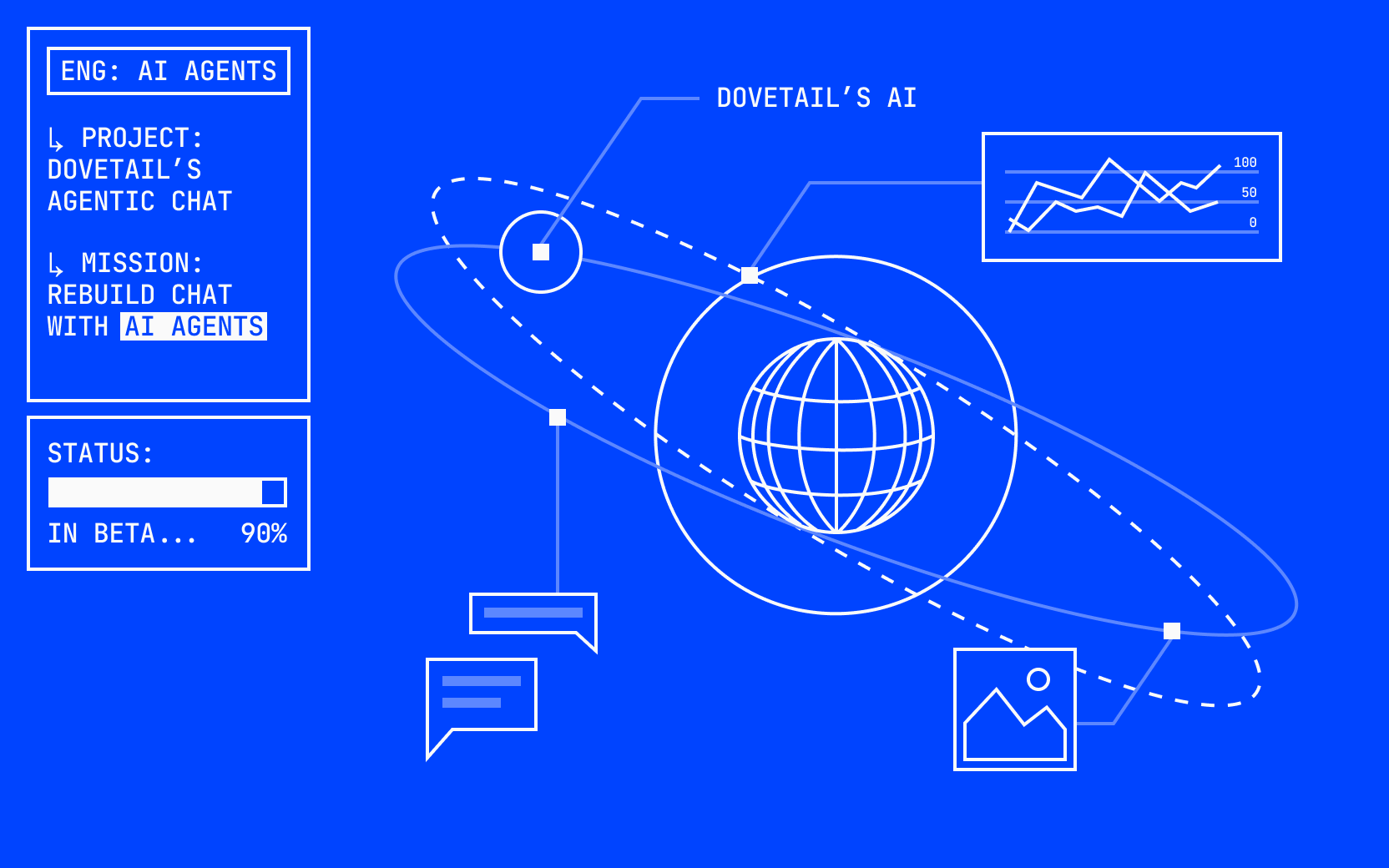
Platforms like Dovetail make it easy to access customer intelligence at scale, anticipate customer needs and integrate intelligence into decisions and product prototypes, closing the loop on customer feedback.
Here is a step-by-step guide for generating and leveraging customer intelligence.
Identify your customer data sources
Customer intelligence is the practice of aggregating and analyzing diverse data to understand customer behaviors and preferences at scale. A foundation of sources spans:
- Sales calls, customer service messages, and call transcripts
- Support tickets and app reviews
- Social media engagements and community posts
- Survey feedback, customer interviews, and usability tests
Start by creating an inventory across product, marketing, sales, support, and operations teams. An effective customer intelligence platform will consolidate unstructured inputs into a predictive, 360-degree customer view.
Select the right platform for integration
Integration is the process of combining data from multiple sources into one platform so teams can analyze and act without needing to switch tools.
Prioritize a customer intelligence platform that:
- Offers native and no-code connectors across support, sales, and customer feedback tools, for example, Google Drive, Zendesk, G2, and Pendo.
- Automates data aggregation
- Provides real-time analytics and alerting
- Scales without heavy administrative overhead
Dovetail enables you to automatically import data from various platforms including Gong, Zendesk, Intercom, Pendo, G2, Google Meet, and Google Drive. It then standardizes qualitative insights for action. Automated feedback flows, coupled with AI synthesis and agents that perform a range of tasks, enable teams to drive scalable intelligence.
Use AI and automation to analyze customer data
Modern AI customer intelligence analyzes sentiment, buying signals, and account health across channels to optimize strategy.
Core AI capabilities to prioritize:
- Pattern recognition across large unstructured datasets
- Segmentation capabilities and predictive intelligence to forecast churn, propensity, and competitive disruption
- Contextual and visual insights, including voice, image, and video analysis for richer understanding
Build feedback loops so models learn from outcomes. As teams accept or refine AI-suggested themes or data highlights, performance improves, surfacing emerging needs earlier and sharpening accuracy over time.
Fuel business strategies with actionable intelligence
Turn analysis into action by wiring insight flows directly into planning and execution. An example of what this might look like is:
- Data → Insight: Consolidated support tickets reveal repeated handoff delays.
- Insight → Strategy: Streamline escalation workflows and introduce guided resolutions in the help center.
- Strategy → Impact: First-contact resolution rises; handle time drops; CSAT increases.
Customer intelligence often uncovers workflow gaps and optimal campaign timing; paired with personalization. Close the loop with:
- Role-based dashboards tied to OKRs
- Automated notifications when sentiment, usage, or account health changes
- Recurring readouts for product, marketing, and support
- Direct integrations to roadmaps, design briefs, and runbooks
Continuously monitor, refine, and update customer intelligence
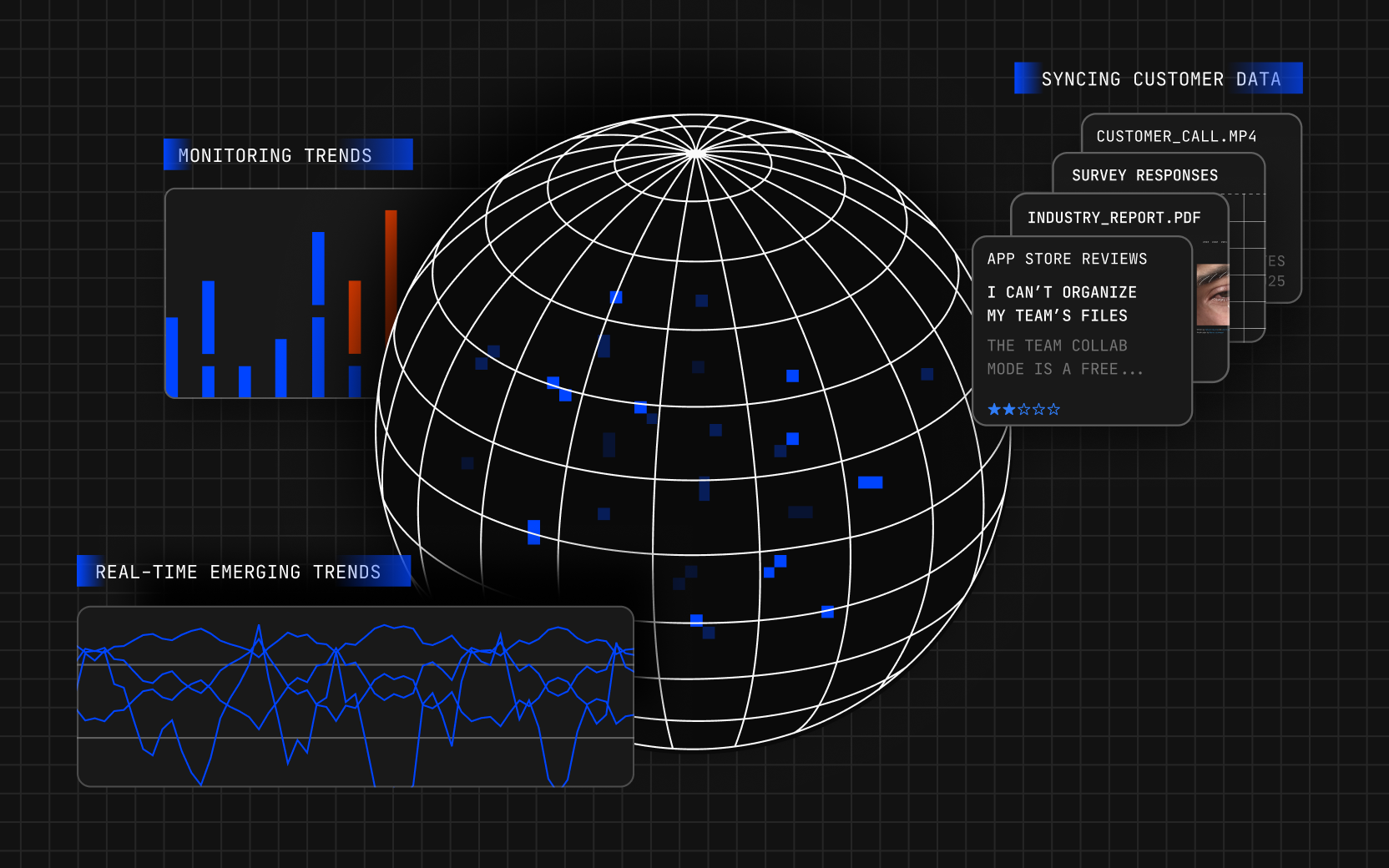
Continuous intelligence means analyzing and refreshing insights as new data arrives so decisions reflect the present, not last quarter. Implement real-time monitoring using agents, then update models, segments, and playbooks as signals shift.
Practical steps:
- Set up agents to montior performance metrics for each intelligence-driven action
- Use feedback loops to validate whether changes improved outcomes
- Trigger automated alerts when engagement, sentiment, or account health deviates from thresholds
- Retire stale dashboards and refresh taxonomies as products and audiences evolve
This cadence powers continuous learning, keeping teams closely aligned with customer needs as markets, channels, and behaviors change.
There is no shortage of data in modern organizations; the shortage is in clarity. With customer intelligence, you no longer need to guess which feature to build or which campaign will land. The answers are already in your data—you just need the infrastructure to let them speak.
Want to generate customer intelligence at scale for your organization? Try Dovetail.
FAQs
What types of customer data should I collect for intelligence at scale?
Consider collecting in-product feedback, support tickets, sales calls, social media interactions, and open-ended survey responses for a comprehensive view of your customers.
How can AI improve the accuracy and speed of customer data analysis?
AI can process thousands of feedback points in seconds, identify patterns across various channels, and deliver real-time insights that facilitate accurate, timely business actions.
How do I maintain data privacy and compliance while scaling customer intelligence?
Use platforms with robust privacy controls, adhere to industry regulations, and ensure careful management of consent to balance insight generation with ethical data use.
How can I keep customer intelligence current as new data arrives?
Implement automated data pipelines and feedback loops to ensure new interactions are continuously analyzed, keeping your customer intelligence up-to-date and actionable.
Related Articles