The quiet transition: UXR jobs in the Builder's Era

A new era of UXR is here.
As experts grapple with the new normal, UXR is taking on a new, exciting shape—but that transition comes with growing pains.
While these growing pains are uncomfortable, they're completely normal. It's true that the markets, landscape, and career options in UX are changing, but the need for people with user research skills hasn't gone anywhere.
Moments like this call for exploration. Not just of the profession's future, but of the new opportunities available in this new landscape. User research is here to stay—it'll just be packaged under new job titles, with more responsibilities, exploring different use cases.
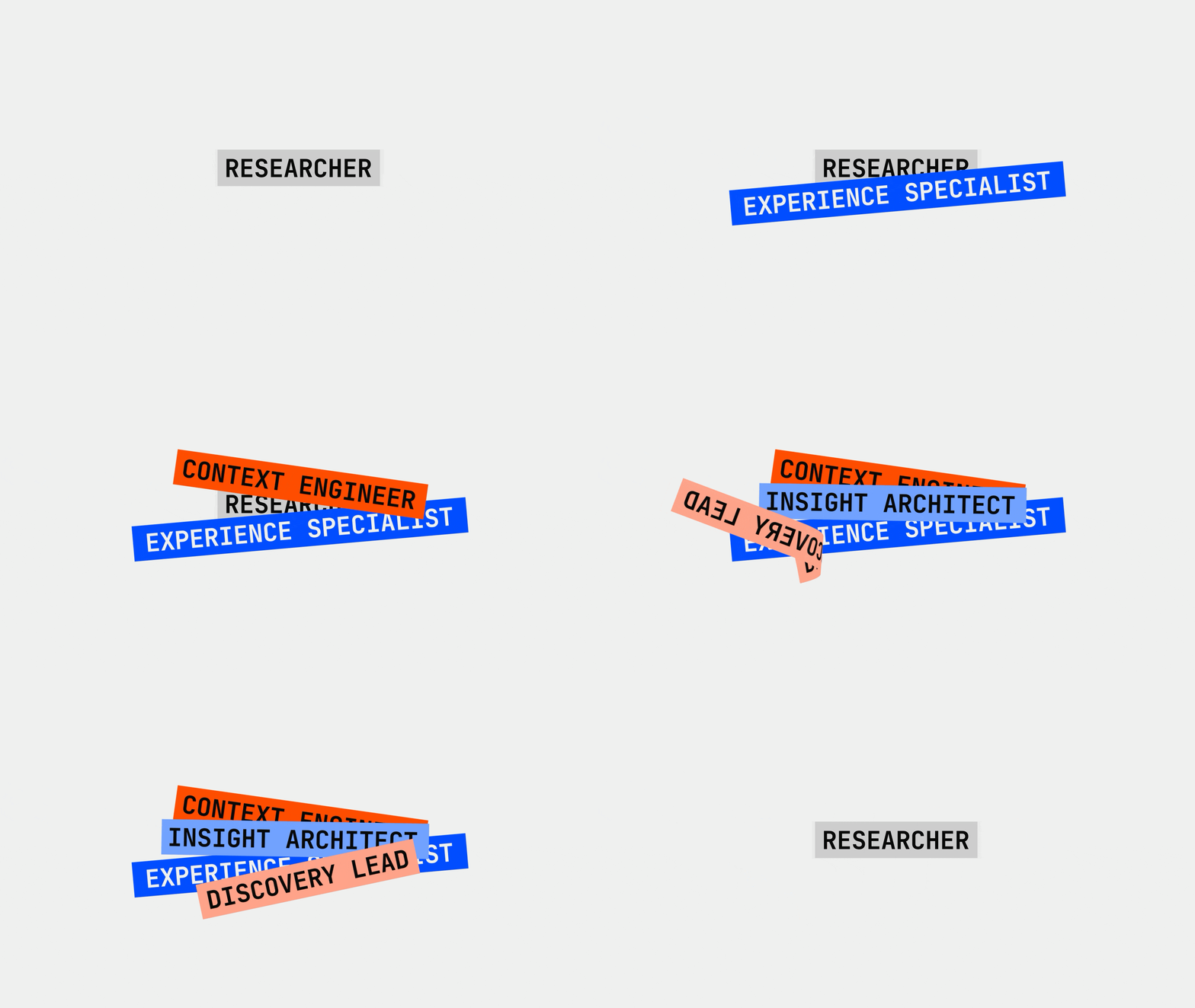
The UX researcher title is in transition
How organizations behave in the Builder Era
The terms "builders" and "owners" have been thrown around on professional podcasts and newsletters a lot lately, and I don't think that's a coincidence.
It's clear, across multiple different tech jobs and sectors, that businesses want their employees to adopt this mindset—especially in the current shaky economic conditions.
Organizations expect all functions to have a strong positive impact on the business. Adopting an owner or builder mindset positions UXR professionals to better adapt to this reality.
Classic ROI is harder to prove in UXR, but there are other types of tangible value we can easily show. This includes more informed roadmap decisions, as well as reduced risks and costs to fix things later.
The two main types of organizations
I'm seeing this builder shift happen in real time across industries. If we zoom out, we see two main types of organizations in the market when it comes to technology:
-
Disruptors: These organizations are in the business of innovation and change. Think about startups or special projects (sometimes called "Moonshots") in bigger companies. Disruptors move fast and bring innovation to the market. In today's "AI-first" world, they require user feedback that matches their rapid pace.
-
Traditional organizations: Think banks, airlines, governments, and other traditional organizations that are still in the process of adopting digital technologies and transforming their operations. They are more likely to have regulatory constraints, are more conservative with risk, and need a very different type of feedback from their users.
Researchers working at these organizations have different challenges, but the same goal.
On our end, that translates to different strategies:
-
Disruptors: In the past, we used to ask whether the UI was usable and test prototypes to answer it. However, with emerging technologies, the questions asked are mostly about value creation and trust around these technologies, and less about usability only. It could apply to AI, Blockchain, or any other emerging technology, and the evaluation cycles tend to be faster and centered around working solutions. Think things like a thumbs-up or down button used to collect feedback contextually within chatbot interfaces about a response's accuracy, or a quick in-flow survey.
-
Traditional organizations: Before, organizations wanted to know if users could complete tasks. Now, it's about how employees and customers adapt and sustain change with new digitalized processes. Things like real-world observations through digital analytics and session replay tools, as well as periodic surveys and interviews with customers and employees, are examples of techniques that these types of orgs are likely to adopt and use.
The work will remain, just with a different title
Same UXR, different title
We can't predict the future—but we can imagine plausible scenarios.
In the Builder Era, the value of user research will be expressed less through the act of research itself, but more through the decisions it helps shape.
Titles will change, but building and owning this area will be baked into the job. Here's how these roles could adapt in practice:
-
Feedback Community Manager: This role would build and own a curated pool of engaged users for ongoing feedback, working alongside GTM or marketing rather than UX design. They could run targeted Beta tests, diary studies, and informal feedback loops at community events. This role would require strong relationship-building and cross-functional collaboration skills, plus the judgment to keep feedback genuine and not perk-driven. Job titles around this responsibility could vary, but may include a responsibility to run a Voice-of-the-Customer (VoC) program. Because this role targets fast input while cultivating loyal users, it would be ideal for disruptors.
-
Insights Ops Manager: This position would act as an internal product manager (PM) for insights, building the system that lets others collect feedback well and synthesize it across teams. They may train and coach other functions, such as PMs, marketers, and designers, on how to collect customer feedback and run interviews and usability tests. They would also own the tooling, centralized repositories, and vendor relationships that turn scattered signals into strategic insight. Some organizations already hire people for ResearchOps. Insights Ops could be the next level from this, collaborating with other closely related functions, such as Data Ops. This role would require systems thinking, vendor management, and coaching skills, and would work in both disruptors and traditional organizations.
-
Specialized Consultant: People with this title may solve scoped, high-stakes strategic questions as an external domain expert. They would help tackle burning problems for nimble organizations with little bureaucracy. Such a role might cluster into boutique agencies built around specific industries (e.g., fintech, cybersecurity, or defense tech) and would be a natural path when a business has no capacity for an internal builder or owner. Because this role requires specialization and a strong point of view on certain domains, it would be a great fit for disruptors.
Adaptation has become the new normal
The transition period has come
UXR's positioning is shifting from researcher on a UX team to partner, builder, and owner in the business's value chain. We can also expect user research professionals to move beyond UX and product design, into teams where their skills create additional strategic impact: product management, GTM, and business strategy.
This shift will ask many of us to expand how we see ourselves. Moving beyond the UXR label toward something closer to being a builder or owner isn't a loss of identity. It's an expansion of it.
The new positioning of UXR puts us in areas where impact is easier to measure: faster decisions, stronger product roadmaps, and centralized insights that actually get used.
That's what will matter most in the Builder Era. And it's a better seat at the table than the one we've had before.
Subscribe to Outlier
Juicy, inspiring content for product-obsessed people. Brought to you by Dovetail.